.avif)


Don't be the next Morphe! Ecommerce influencer marketing secrets for sustainable sales & growth. Discover Phyllo's AI-powered Brand Fit Matrix to find the perfect influencers & avoid costly mistakes.
- Morphe influencer marketing built the makeup brand on YouTube beauty gurus in the 2010s, then ended in bankruptcy in 2023.
- Allegations against James Charles and Jeffree Star forced Morphe to publicly distance itself from its biggest revenue drivers.
- Morphe's 2020s relaunch with TikTok sisters Dixie and Charli D'Amelio reached huge audiences but never hit the sales numbers the brand chased.
- Phyllo's Brand Fit Matrix scores creators on aesthetic, emotional, and ethical similarity, audience overlap, and fake follower checks.
- Active social listening keeps the Brand Influencer Fitment Score current and flags PR risks before they reach the brand.
Social media is advantageous for building a brand presence and attracting followers. But if you’re from the ecommerce space, you are after online sales. Afterall, the ecommerce machine needs sales and revenue to keep running.
Influencer-driven video commerce content, or simply put influencer marketing, is how savvy brands of all sizes unlock new growth opportunities. That said, social media has many layers of complexity over traditional marketing channels.
The rise and fall of Morphe
Ecommerce giant Morphe specialises in makeup, and took over the internet and buyers’ alike in the 2010 on the backs of Youtube beauty gurus. They cleverly strategized how to to reach and influence new potential buyers.
They were working with every creator with a passion for makeup - or were they giving away discount codes to just any influencer who could drive sales?
The downfall came as major revenue drivers such as James Charles and Jeffree Starr got into hot water. The brand was forced into issuing statements separating themselves from the massive internet cancellations. But its important to note, these weren’t quite the overnight cancellations that sometimes take over Twitter X by storm.
For weeks, James Charles had been receiving allegations of flirting with underage individuals on social media, over and over again. Jeffrree Starr was no stranger to backlash anyway with problematic racist comments and clips littering the online landscape.
Entering the new decade of ‘20s, Morphe decided to relaunch with freshly-minted TikTok star-sisters: Dixie and Charlie D’Amelio. But Dixie’s army of energetic, goofy dance enthusiasts, and Charlie’s community of slime lovers couldn’t quite replicate the sales numbers Morphe was chasing.
The result: the same brand that influenced millennials with their successful influencer campaigns had ended up losing loyal customers, and completely failed to tune into GenZ.
And in 2023, Morphe declared bankruptcy.
There’s important takeaways for ecommerce brands here: simply pumping money into the channel isn’t guaranteed to work out. Successful partnerships create repeatable growth translating into steady, long-term revenue.
At Phyllo, we’ve spent countless hours figuring out the math to this to ensure influencer marketing campaigns that convert. We call it the Brand Fit Matrix.
The Brand Fit Matrix
→ Influencer-Brand Personality Matching
Some managers will tell you it is superficial to consider influencers’ personality; they’re all the same when it comes to selling a product, right?. That’s exactly the mistake we saw Morphe make.
Do not fall into the honeytrap of short-term conversions while risking long-term brand image. Brands that fail to balance the two have been observed to end up on the bad side of Reddit threads.
We advocate for assessing a given creator based on Aesthetic Similarity, Emotional Similarity and Ethical Similarity.
- Aesthetic Similarity: representing similarity in visuals and aesthetics of the media content posted on both the profiles
- Emotional Similarity: representing tone or sentiment similarity of the content posted on both the profiles.
- Ethical Similarity: representing the caption and AI generated image caption similarity of the content posted on both the profiles; this accounts for similarity of topics, themes or industries targeted.
→ Deep Audience Analysis
You cannot SKU strawberries at a hardware store. And you cannot sell your product working with someone who does not direct engage a community that overlaps with the audience segment that can benefit from your product (or services.)
It is imperative to understand what appeals to an influencer’s audience, and how this should govern your messaging towards them.
→ Real vs Fake Follower Analysis
Small but mighty step - this one get’s a whole point because it is just that important. Wannabe’s still buy fake followers to get ahead in the numbers game.
The larger picture here should be to understand if the influencers’ numbers are mere inflations or do they have engaged audiences that are invested in a shared set of ideas and values.
Based on this matrix, we determine the foundations of a unique Brand-Influencer Fitment Score.
→ Lookalike Influencers to Expand Correctly
When your ads are performing, you should extend them to adjacent audiences. And when your influencer marketing campaigns are working out, you should look to partner with ‘Lookalike’ influencers.
These are influencers who share similar audiences and/or offer similar performance benchmarks. While the former is recommended for Brand Building and Awareness, the latter can help unlock a new segment of buyers.
→ Active Social Listening For Ongoing Partnerships
With active social listening, there’s room to refine and keep track of the unique Influencer-Brand Fitment Score in real time! And this can help identify any potential PR disasters due to influencers you’re partnered with, so they can be dealt with swiftly and effectively.
Further, it’s a very responsible idea to keep an eye out for social dialogue around the creators you’re working with, and weather or not the public favours them.
AI-powered Brand Fit APIs
Phyllo APIs power global Creator Economy and Influencer Marketing Space giants with social data driven intelligence. We’ve learnt these lessons in our experience with the largest FMCG players - and we’ve learnt them quite slowly to be honest. Now, we’ve packed the months of learnings into our AI-driven Brand Fit APIs that intelligently automate this entire process.
Our models specialise in Ecommerce, Fashion, Beauty, and Retail datasets, learning and interpreting conversations from far corners of the internet, and translating and reading different types of media.
It works on the same principles we’ve outlined above, offering insightful and actionable reports to help drive the campaign objectives that deliver on your bottom line.
Explore our Brand Fit APIs here.
You might also like:
- Brand Fit APIs for enterprises
- Brand Fit Micro-app
Why did Morphe's influencer marketing strategy fail?
Morphe tied its growth to a handful of high profile beauty creators, so when James Charles and Jeffree Star faced allegations, the brand lost both trust and its revenue engine.
When did Morphe go bankrupt?
Morphe declared bankruptcy in 2023, ending a run that started with YouTube beauty gurus in the 2010s and passed through a TikTok led relaunch that never delivered the sales it needed.
Why didn't the D'Amelio relaunch work for Morphe?
Dixie and Charli D'Amelio brought enormous TikTok reach, but their dance and slime loving communities did not overlap with makeup buyers, so Morphe's sales never followed the views.
What is the Brand Fit Matrix?
The Brand Fit Matrix is Phyllo's framework for judging influencer partnerships across personality matching, audience depth, follower authenticity, lookalike expansion, and social listening.
How do you measure influencer and brand personality fit?
Personality fit rests on three axes: aesthetic similarity in visuals, emotional similarity in tone and sentiment, and ethical similarity across captions, topics, and industries.
Why does audience overlap matter more than follower count?
Reach only converts when a creator's community already wants what you sell. You cannot SKU strawberries at a hardware store, and raw follower totals hide whether that overlap exists.
How do you spot fake followers before signing an influencer?
Run a real versus fake follower check before you sign. The question is whether the audience is genuinely engaged and invested in shared values, not how big the number looks.
What are lookalike influencers and when should brands use them?
Lookalike influencers share audiences or performance benchmarks with a creator already working for you. Similar audiences build awareness, while similar benchmarks open new buyer segments.
What do Phyllo's Brand Fit APIs do?
Phyllo's Brand Fit APIs are AI driven social data infrastructure that automate brand fit scoring, with models built on ecommerce, fashion, beauty, and retail datasets for actionable reports.
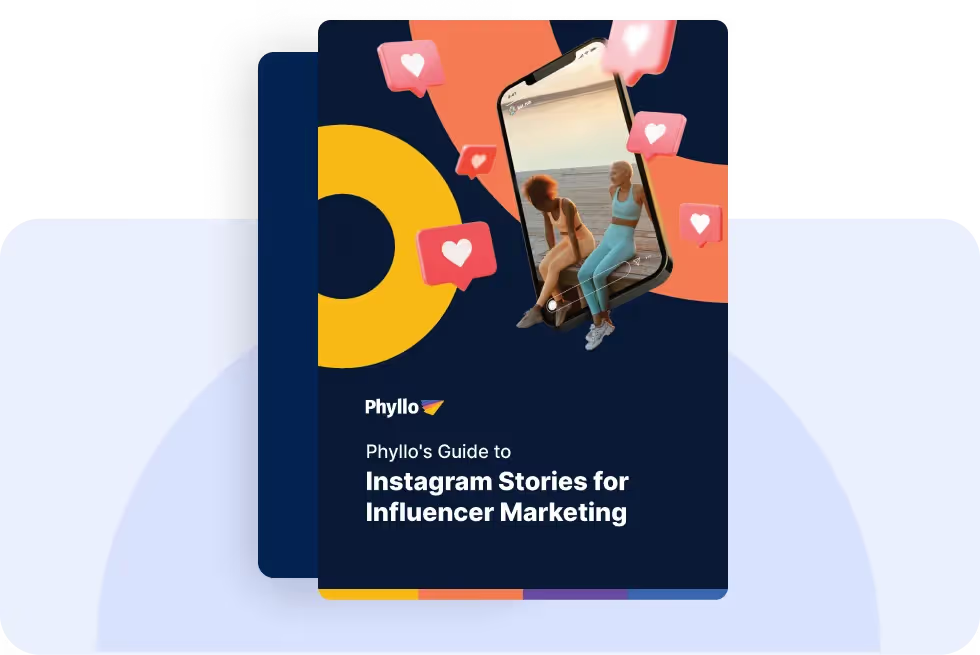
Download our detailed guide on how to leverage Instagram Stories for influencer marketing