



TL;DR: Traditional background checks no longer capture modern workplace risk. This blog explains why social media screening is becoming the most common background check for employers, how it complements existing checks, and how it helps protect culture, reputation, and hiring decisions.
- Social media screening is becoming the most common background check for employers because public online behavior reveals risks that criminal and employment checks miss.
- Employers watch for 5 risk signals: repeated harassment, public threats, discriminatory language, confidential data leaks, and patterns of unethical conduct.
- Ethical programs review only public content and follow 5 best practices: documented policies, consistent application, human review, transparency, and legal compliance.
- Structured platforms like Phyllo's Social Media Screening replace ad hoc manual checks with standardized criteria, audit-ready records, and scalable workflows.
Background checks have long been a standard part of the hiring process. Employers have relied on criminal records, employment verification, and reference checks to reduce risk and validate candidate credentials. However, as workplaces become more digital, public-facing, and values-driven, these traditional checks are no longer sufficient on their own.
Today, employers are increasingly turning to social media screening as a core component of background verification. Public online behavior often reveals insights into communication style, professionalism, and potential risk that formal records simply do not capture. This shift is not about replacing traditional checks, but about addressing the growing gap between how people present themselves on paper and how they behave in real-world digital environments.
The Evolution of Background Checks in Modern Hiring
Hiring practices have always adapted to changes in how people work and communicate.
Why background checks had to evolve
Traditional background checks were designed for a time when most professional interactions happened offline. Risk signals emerged slowly, and formal records were often enough to assess suitability for a role.
Today, work happens in public and semi-public digital spaces. Employees represent organizations online, interact with customers publicly, and share opinions at scale. As a result, employers need tools that reflect this reality.
Several forces have driven the evolution of background checks:
- Increased use of social media across all age groups
- Greater emphasis on employer brand and reputation
- Higher expectations around workplace safety and conduct
- Faster spread of reputational risk through digital channels
These changes have made behavioral insight just as important as credential verification.
What Social Media Screening Means for Employers
Social media screening is often misunderstood, particularly by organizations encountering it for the first time.
Moving beyond informal profile checks
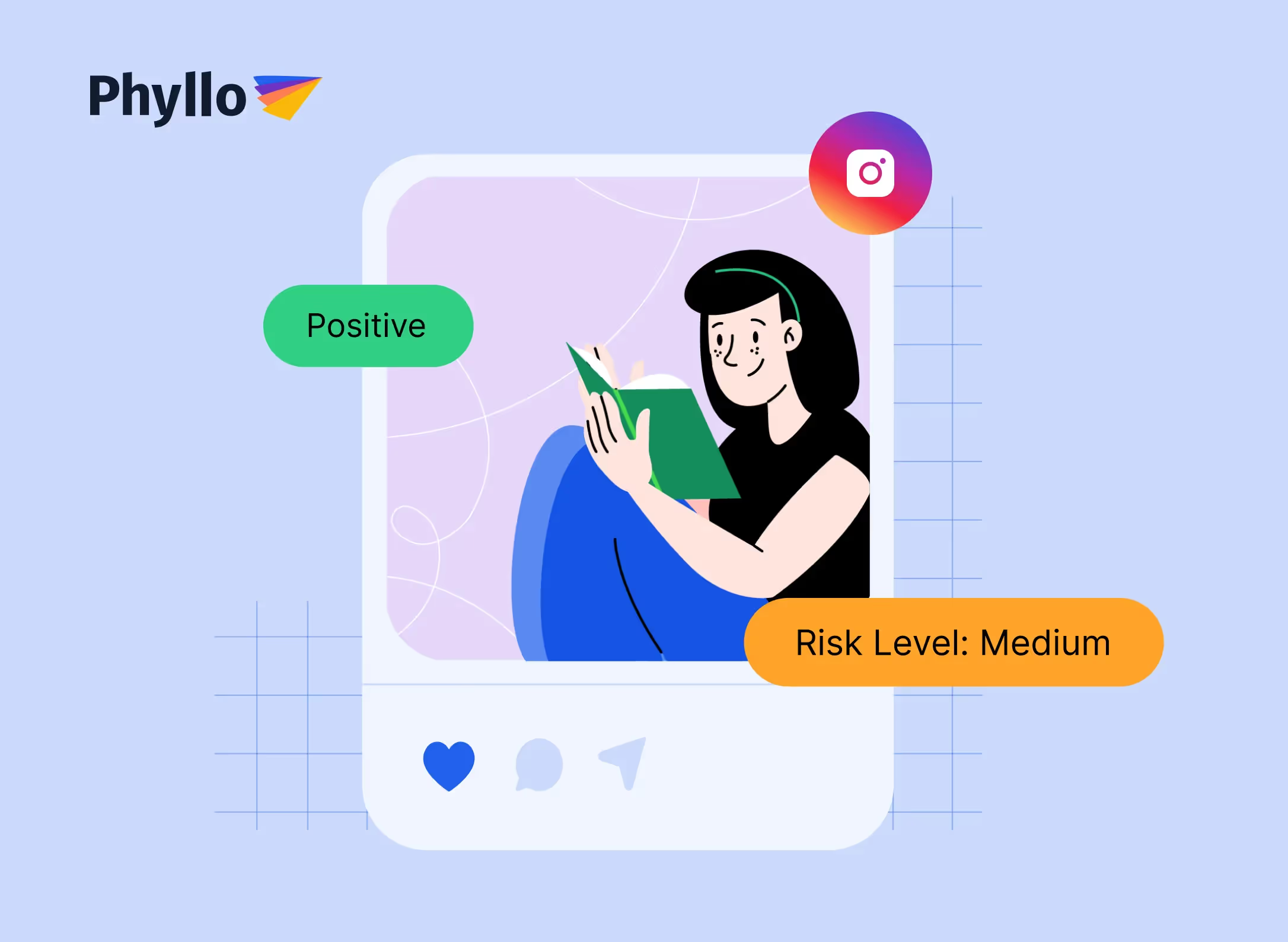
Social media screening refers to the structured review of publicly available online content to identify potential risks related to behavior, professionalism, and alignment with organizational values. It does not involve accessing private accounts or personal messages.
A formal Social Media Screening process typically evaluates:
- Public posts, comments, and profile information
- Patterns of communication and tone
- Evidence of harassment, hate speech, or threats
- Public behavior that may violate workplace policies
- Signals that indicate potential reputational or safety risks
This structured approach is very different from ad-hoc manual searches conducted by hiring managers.
Why Employers Are Adopting Social Media Screening at Scale
The widespread adoption of social media screening is not accidental.
Addressing blind spots left by traditional checks
Criminal records and employment verification focus on historical and formal information. They do not capture ongoing behavior or emerging risks.
Employers increasingly recognize that:
- Most workplace issues never result in criminal records
- Behavioral problems often surface online first
- Cultural misalignment is a leading cause of early turnover
- Public misconduct can damage employer reputation instantly
Social media screening helps fill these gaps by providing context that traditional tools miss.
The Role of Public Digital Behavior in Hiring Decisions
Public behavior is becoming a proxy for workplace conduct.
Why online conduct matters to employers
How individuals communicate publicly often reflects how they interact with colleagues, customers, and stakeholders. Patterns of hostility, disrespect, or poor judgment online can translate into real-world workplace issues.
Employers pay attention to online behavior because it can indicate:
- Communication style under pressure
- Respect for diversity and inclusion
- Professional judgment and boundaries
- Willingness to follow organizational norms
These factors directly influence team dynamics and long-term performance.
Limitations of Traditional Background Checks Alone
Traditional background checks remain important, but they have clear limitations.
What conventional checks do not reveal
Background checks typically verify:
- Criminal history
- Employment and education
- Identity and eligibility to work
They do not reveal:
- Ongoing behavioral patterns
- Attitudes toward colleagues or customers
- Public expressions of bias or hostility
- Risk factors that have not reached legal thresholds
As a result, employers may hire candidates who appear qualified but later create internal or external issues.
How Social Media Screening Reduces Hiring Risk
Employers use screening to prevent issues, not to judge personal beliefs.
Identifying relevant red flags early
Social media screening focuses on behaviors that are relevant to workplace safety, culture, and reputation.
Examples of risk signals include:
- Repeated harassment or bullying behavior
- Public threats or glorification of violence
- Discriminatory language targeting protected groups
- Sharing of confidential or sensitive information
- Patterns of aggressive or unethical conduct
Identifying these signals early allows employers to make safer, more informed decisions.
The Impact on Workplace Culture and Retention
Hiring decisions shape culture long after onboarding.
Why behavioral alignment drives retention
Employees who align with organizational values are more likely to stay engaged and committed. Conversely, cultural misalignment often leads to conflict, disengagement, and early exits.
Social media screening supports retention by:
- Reducing mis-hires that disrupt teams
- Protecting psychological safety in the workplace
- Reinforcing behavioral expectations early
- Supporting more cohesive team dynamics
This makes screening a long-term workforce strategy, not just a hiring filter.
Ethical and Legal Considerations for Employers
Responsible implementation is critical for adoption.
Conducting social media screening the right way
Ethical social media screening focuses strictly on job-relevant, publicly available information. It avoids protected characteristics and personal attributes unrelated to work.
Best practices include:
- Clear, documented screening policies
- Consistent application across candidates
- Human review and contextual evaluation
- Transparency in hiring processes
- Compliance with employment and data protection laws
When done correctly, screening strengthens fairness rather than undermining it.
Automation and Consistency in Modern Screening Programs
Scale and consistency matter as hiring volumes grow.
Why structured screening beats manual searches
Manual social media checks by individual hiring managers are inconsistent and prone to bias. They also do not scale and often lack documentation.
Modern screening platforms provide:
- Standardized evaluation criteria
- Audit-ready records
- Reduced subjectivity
- Scalable workflows across roles and regions
A well-designed Social Media Screening program replaces informal practices with consistent, defensible processes.
Use Cases Across Industries and Roles
Social media screening is no longer limited to specific sectors.
Where employers apply screening today
Employers increasingly use screening for:
- Customer-facing and public-facing roles
- Leadership and management positions
- Trust-sensitive roles
- High-volume hiring environments
- Contractor and vendor onboarding
As digital exposure grows, screening becomes relevant across more roles and industries.
Addressing Candidate Concerns and Transparency
Candidate perception matters for employer branding.
Why openness builds trust
Candidates are more accepting of screening when employers are transparent about why and how it is used. Clear communication sets expectations and reinforces organizational values.
Transparency helps:
- Attract candidates aligned with company culture
- Reduce misunderstandings or mistrust
- Strengthen employer brand credibility
- Support fair and respectful hiring practices
This openness itself contributes to better hiring outcomes.
The Future of Background Checks for Employers
Background checks will continue to evolve alongside work itself.
Why social media screening will keep growing
As work becomes more remote, digital, and values-driven, public online behavior will play an even larger role in hiring decisions.
Employers that integrate Social Media Screening into their background check strategy are better prepared to:
- Anticipate emerging risks
- Protect workplace culture
- Safeguard brand reputation
- Adapt to regulatory and social expectations
Social media screening is becoming common because it reflects how people actually engage with the world today.
Conclusion: A New Standard for Employer Due Diligence
Social media screening is no longer a niche practice or experimental trend. It is becoming the most common background check for employers because it addresses real gaps in traditional hiring methods.
By providing insight into public behavior, communication style, and potential risk, social media screening helps employers make safer, more informed hiring decisions. When implemented ethically and consistently, it strengthens workplace culture, reduces risk, and supports long-term organizational success.
FAQs
1. Is social media screening legal for employers to use?
Yes. Social media screening is legal when it focuses only on publicly available information and complies with employment, privacy, and data protection laws. Ethical screening avoids protected characteristics and applies consistent criteria.
2. Does social media screening replace criminal background checks?
No. Social media screening complements traditional background checks. Criminal checks verify legal history, while social media screening provides behavioral and reputational context.
3. Which roles benefit most from social media screening?
Roles involving customer interaction, leadership, trust, or public representation benefit most, as public behavior directly impacts workplace culture and employer reputation.
Is social media screening legal for employers?
Yes. Social media screening is legal when it reviews only publicly available, job-relevant content, avoids protected characteristics, and complies with employment and data protection laws.
What is social media screening in a background check?
Social media screening is a structured review of a candidate's public posts, comments, and profiles to spot job-relevant risks like harassment, threats, or discriminatory language.
Does social media screening replace traditional background checks?
No. It complements them. Criminal and employment checks verify legal history and credentials, while social media screening adds the behavioral and reputational context they miss.
Can employers look at private social media accounts during screening?
Ethical screening reviews only publicly available content, so private accounts, personal messages, and password-protected posts stay off limits in an employer background check.
What red flags do employers look for in social media screening?
Common red flags include repeated harassment or bullying, public threats, discriminatory language targeting protected groups, and sharing of confidential or sensitive information.
Why use a screening platform instead of manual profile checks?
Manual checks by hiring managers are inconsistent, biased, and rarely documented. Screening platforms apply standardized criteria, keep audit-ready records, and scale across regions.
Which roles benefit most from social media screening?
Customer-facing, leadership, trust-sensitive, and high-volume hiring roles benefit most, since public behavior directly affects workplace culture and employer reputation.
What does Phyllo's Social Media Screening evaluate?
Phyllo's Social Media Screening reviews public posts, comments, and profile information for job-relevant risk signals such as harassment, hate speech, threats, and policy-violating behavior.



.avif)
.avif)