
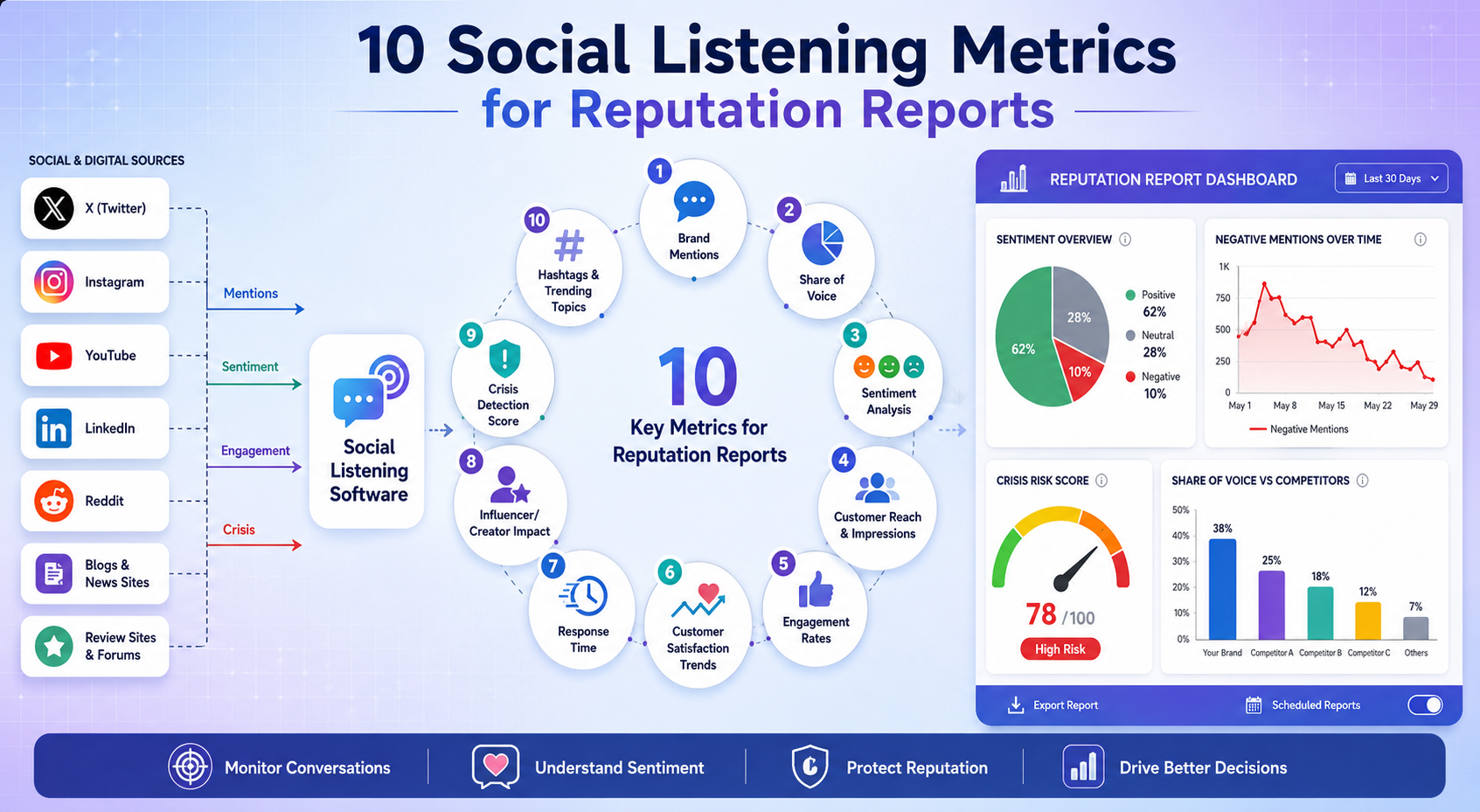


TL;DR Summary: Businesses and brands must refer to the key insights such as sentiment analysis, share of voice, engagement rate, and crisis detection through advanced social listening tools and social listening platforms. It also highlights real-world scenarios showing how social listening and social media monitoring help brands respond proactively to customer conversations and online reputation challenges.
- Reputation reports rest on 10 social listening metrics, led by brand mentions, share of voice, and sentiment analysis.
- Share of voice benchmarks your brand against competitors across channels like Reddit, X, YouTube, and news blogs.
- Reach counts unique viewers while impressions count every display, so a post seen by 10,000 people can log 15,000 impressions.
- Crisis detection scores flag sudden surges in negative mentions, and one airline reversed negative sentiment within 7 days of replying faster.
- Phyllo's Social Listening API scores comment relevance with AI and clusters similar complaints instead of stopping at positive or negative labels.
The 10 essential social listening metrics for reputation reports are brand mentions, share of voice, sentiment analysis, reach and impressions, engagement rates, customer satisfaction trends, response time, influencer impact, crisis detection score, and hashtags and trending topics. Brand mentions measure overall visibility, while share of voice benchmarks your presence against competitors. Sentiment analysis reveals whether public conversations are positive, negative, or neutral, and reach and impressions quantify how far your content travels. Engagement rates reflect how meaningfully audiences interact with your posts, while customer satisfaction trends surface recurring complaints or praise in feedback. Response time indicates how quickly your team addresses concerns, and influencer impact tracks how creators shape public opinion. Finally, crisis detection scores alert brands to sudden negative surges, and hashtag and trending topic analysis helps identify viral moments and emerging risks in real time.
Online conversations shape the public perception in today’s digital business environment as compared to any traditional advertising campaign. Whether customers praise a product, criticise the offered customer support, or discuss a trending controversy, brands must monitor every interaction precisely. Here comes the role of social media listening software for businesses willing to protect and boost their reputation.
Modern companies often rely on advanced social listening platforms and social listening tools to collect real-time insights from blogs, social networks, forums, online communities, and review websites. Such technologies help organizations to detect the crisis early, measure the audience sentiment, and improve strategies related to brand reputation management.
For a complete overview of how these platforms work — covering the five core API types, the difference between monitoring and listening, and the strategic framework that underpins every metric in this guide — see our foundational resource on social media listening and monitoring.
However, businesses and brands also require the right metrics to create their meaningful reputation reports. Effective social listening involves understanding the measurements that truly reflect the perception of the audience and their impact on the business.
1. Brand Mentions
Brand mentions highlight the number of times your products, company, campaigns, or executives are referred via online platforms. It serves as a foundational social listening metrics, as it indicates your brand visibility across diverse digital channels.
Scope of Brand Mentions
Brand mentions primarily measures the brand awareness, overall conversation volume, public interest, and campaign visibility.
Significance of Brand Mentions
A sudden spile in brand mentions may lead to:
- Success in viral marketing (positive impact)
- PR controversies (negative impact)
- Product launches (positive impact)
- Complaints from customers (negative impact)
For instance, if a smartphone company launches a new mobile phone and gets 50,000 mentions in only 24 hours, the brand may analyze and distinguish between positive and negative discussions.
Modern social listening platforms may automatically track brand mentions across LinkedIn, Instagram, X or Twitter, YouTube, Reddit, news websites, and blogs.
2. Share of Voice
Share of Voice plays a vital role in comparing the online visibility of your brand against competitors. It calculates the percentage of overall conversations of your brand in an industry.

Significance
If your competitors remain at the relatively higher positions in discussions, your current market presence will become weak. Companies mainly use social listening platforms to optimize their content strategies by benchmarking their competitors.
3. Sentiment Analysis
Sentiment analysis measures and finds the emotional tone behind any online conversation. Brands often use an innovative social media listening software like Phyllo's Social Listening API to classify and analyze sentiments as neutral, positive, and negative — with AI relevance scoring that goes beyond simple positive/negative classification to surface the comments that actually matter.
Scope
Sentiment analysis influences the reputation management of a brand directly based on the way, in which its customers’ feelings. Common examples are:
- Positive sentiment will indicate a successful campaign
- Negative sentiment may highlight products or services-related problems
- Lastly, a neutral sentiment will suggest a low emotional engagement
Significance
Sentiment analysis metrics provided by Phyllo-powered social media listening software may detect the customer dissatisfaction in advance, measures any campaign performance, evaluates the customer trust, and helps to prioritize customer support. Other than that, a few advanced social listening tools may identify the human emotions as well. These include excitement, anger, joy, and frustration. Sentiment analysis thus lets businesses and brands to understand the behavior patterns of their audience deeply.
4. Customer Reach and their Impressions
Reach is the number of unique people who saw your content. Impressions count every time your content was displayed. For instance, if 10,000 users have viewed an Instagram post and say 5,000 users viewed the post twice while the remaining ones viewed the post only once, the reach and impressions will be:
Reach=10,000
Impressions=5000 x 2+ 5000 x 1 =15,000
Significance
Customer reach and their impressions metrics help brands and businesses to evaluate their brand visibility, audience expansion, and effectiveness of social media campaigns. Many social listening tools and software usually combine the customer reach data with sentiment analysis for determining the benefits and drawbacks of high brand visibility.
5. Engagement Rates
Engagement rates measure the interaction of your audiences with your posts and contents. These include the likes, comments, shares, retweets, clicks, and saves.
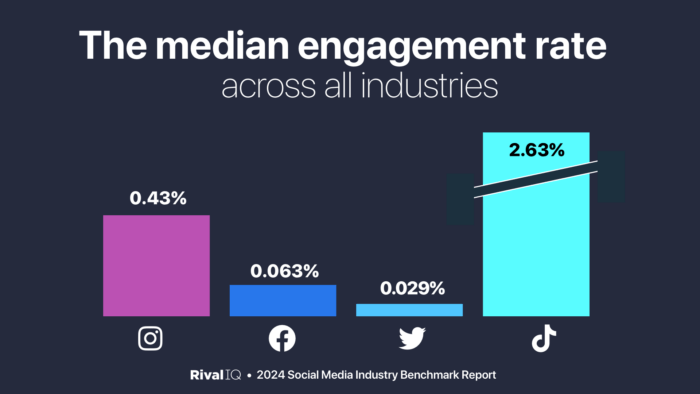
Significance of Engagement Rates
Low engagement rates indicate the following:
- Poor quality of content
- Irrelevant messages
- Fatigue among the audience
High engagement rates indicate the following:
- Strong interest of the audiences
- Effective messages
- Positive connections for the brand
Engagement trends in social media monitoring help marketers to identify the campaigns that resonate properly with their audiences.
6. Trends in Customer Satisfaction
Trends in customer satisfaction primarily analyze a few recurring themes in the customer feedback. These include the product quality, pricing concerns, delivery experience, feature requests, and customer support.
Significance
Customer satisfaction trends social listening metrics help companies and businesses to identify the following:
- Weaknesses in the delivered services
- Long-term trends in reputation
- Patterns in customer loyalty
For instance, if users complain about delays in the shipping process repeatedly, brands may inquire and investigate the logistics problems immediately. Besides, a few of the advanced social listening platforms, like for instance Phyllo use AI clusters to automatically group similar complaints.
7. Response Time
Response time calculates the time taken by any brand to reply to its customer messages and complaints.
Significance
Delayed responses in today’s instant communication era may affect or even spoil the customer trust. Studies have regularly shown that the customers always expect the brands to respond within only a few hours instead of taking many days. Fast response times highlight:
- Active reputation management
- Strong customer service and
- Customer-centric brand operations
Companies may use social media listening software to automate alerts related to urgent complaints and boost their response efficiencies.
8. Impact of Influencers/Content Creators
Impact of influencers measure the way in which industry experts, content creators, or public figures may affect the brand perception. It mainly tracks the audience engagement, influencer mentions, campaign reach, conversion potential, and sentiment shifts.
Significance
Influencers may shape the opinion of your brand in front of the public, especially your target audience. A positive review from any trustworthy creator will boost your reputation significantly, while criticism of such an influencer triggers negative publicity. Brands must use social listening tools to identify the fake engagement, top-performing influencers, emerging creators, and brand advocates. Each aspect will optimize the influencers’ collaborations and reduce any risk related to the brand reputation.
9. Crisis Detection Score
Crisis detection identifies and measures any kind of abnormal spike in the customers’ negative conversations over different social media platforms. AI-powered social media listening software in this case will identify:
- Sudden surges in the customer complaints
- Fake news
- Viral backlashes
- Reputation threats
- Coordinated attacks
Significance
Advanced crisis detection helps marketers and companies respond timely to prevent the issues from escalating. By doing so, brands activate crisis communication faster and prevent all sorts of damage control.
10. Hashtags and Trending Topics
Hashtags and trending topics help brands to understand their audiences’ real-time discussions.
Significance
The metric helps companies to detect crises in advance, identify viral opportunities, join relevant conversations, and understand the specific customer interests. Modern social media monitoring systems regularly analyze the keyword trends and hashtags across diverse platforms.
Real-life Scenarios of Social Listening Metrics
Scenario 1-Crisis Management by a Global Airline Company
A reputed global airline company ABC experienced frequent flight delays from technical failures at the time of holiday season travel. Luckily, it can use advanced social listening platforms to monitor:
- Dissatisfied or angry customer sentiment
- Negative mentions
- Trending hashtags related to customer complaints
- Response times for customer support
The scenarios below show how these metrics work in practice. For real named brand examples applying the same playbook — from Starbucks' community listening strategy to fashion brands tracking sustainability sentiment — see our collection of real-world brand reputation management using social listening.
Key Identifications of the Company
- Consistent increase in the customer complaints on X platform as compared to that of Facebook
- Frustrations among the passengers due to lack of proper communication
- Travel bloggers and influencers amplified the problem further
Actions Taken by the Company
The airline company does the following:
- Issuance of real-time updates
- Improves the speed of customer support response
- Offered suitable compensation vouchers
- Published updates on their operations by maintaining transparency
Outcome
Within only one week, the airline company has got many positive results/outcomes as follows:
- Significant drop in negative sentiments
- Improvement in positive engagement
- Gradual recovery of customer trust
Each outcome highlights the support provided by social listening tools in effective crisis management.
Scenario 2-A New Product Launch by an E-Commerce Company
A leading e-commerce fashion brand EB launched its new eco-friendly and summer clothes collection. It uses social media listening software to track the following:
- Influencer discussions
- Customer sentiment
- Customer engagement rates
- Brand mentions
- Hashtags related to sustainability
Valuable Insights Obtained by the E-Commerce Company
- Many customers have loved the eco-friendly product collections
- Several users questioned the product pricing
- Sustainability of influencers obtained the highest possible engagement
Key Strategic Changes made by the E-Commerce EB Brand
The ecommerce EB brand made the following key strategic changes:
- Created education-based sustainable content
- Collaborated with many eco-conscious influencers
- Transparently explained the premium price options
Results/Outcomes
The campaign organized by the EB brand helped it to achieve the following positive results:
- Higher customer engagement
- Increase in positive sentiment
- Improvement in conversion rates
- Strong brand reputation
The scenario reveals the way, in which the brand reputation management has availed benefits from the data-driven decision-making process.
Conclusion
Online reputation may change within only a few minutes in today’s digital environment. Businesses who fail to monitor customer conversations bear the risk of losing credibility, trust, and market share.
On the other hand, companies may use the advanced social media listening software to track various critical metrics. These include the influencer impact, crisis detection, share of voice, engagement, and sentiment analysis. Each insight helps in smart decisions and strong brand reputation management.
Frequently Asked Questions
1. What is social media listening software?
Social media listening software is a technology solution that tracks, analyzes, and interprets online conversations about brands, products, competitors, and industries across social media and digital platforms.
2. How is social listening different from social media monitoring?
Social media monitoring focuses on tracking mentions and interactions, while social listening goes deeper by analyzing sentiment, trends, customer behavior, and audience insights.
3. Why are social listening metrics important for reputation reports?
These metrics help businesses measure customer perception, identify risks, improve communication strategies, and strengthen overall brand reputation management.
4. Which industries benefit most from social listening platforms?
Industries such as retail, healthcare, aviation, finance, hospitality, technology, and e-commerce heavily rely on social listening platforms to monitor customer sentiment and market trends.
5. Can AI improve social listening accuracy?
Yes. AI-powered social listening tools enhance sentiment analysis, crisis detection, spam filtering, trend identification, and multilingual monitoring for more accurate reporting.
6. What is the biggest advantage of social listening?
The biggest advantage of social listening is real-time visibility into customer opinions, allowing businesses to respond proactively and maintain a strong brand reputation.
What are the key social listening metrics to track?
The 10 core metrics are brand mentions, share of voice, sentiment, reach and impressions, engagement rate, satisfaction trends, response time, influencer impact, crisis score, and hashtags.
What is share of voice in social listening?
Share of voice is the percentage of all industry conversation that mentions your brand rather than a competitor, so it tells you whether your market presence is growing or slipping.
What is the difference between reach and impressions?
Reach counts the unique people who saw a post, impressions count every display. A post reaching 10,000 people where half viewed twice records 15,000 impressions.
How do you measure brand sentiment on social media?
Sentiment analysis sorts mentions into positive, negative, or neutral by reading the emotional tone of each conversation, and stronger tools also detect anger, joy, and frustration.
How does a crisis detection score work?
A crisis detection score watches for abnormal spikes in negative conversation, flagging complaint surges, fake news, viral backlash, and coordinated attacks before they escalate.
How is social listening different from social media monitoring?
Monitoring tracks mentions and interactions. Social listening goes further, analyzing sentiment, trends, audience behavior, and the insights behind those mentions for reputation work.
Can Phyllo track social listening metrics for reputation reports?
Yes. Phyllo's Social Listening API delivers the sentiment, mention, and creator data behind these metrics, adding AI relevance scoring and clusters that group similar complaints.