
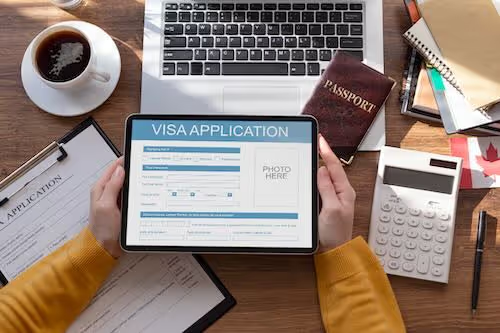


This guide explains how social media vetting works for US student visa applicants. It covers what immigration officers review, common mistakes students make, how to clean up online profiles, and how responsible digital behavior helps strengthen visa approval chances.
- Social media vetting for US student visas means officers review public posts, comments, and networks to confirm identity and flag risks.
- The DS-160 form asks for every handle used in the past 5 years, and F, M, and J applicants are asked to set profiles to public.
- Officers weigh 5 areas: public content, biographical consistency, online interactions, affiliations, and hostile behavior.
- Old posts still count for F1 applicants, so risky humor, name mismatches, and illegal activity posts cause the most trouble.
- Cleanup beats deletion, so check what a stranger sees, match profile details to your DS-160, and show academic work.
Social media has become one of the most influential parts of a person’s identity. Everything you like, comment on, post, and share becomes a reflection of your digital footprint. International students planning to study in the United States are gradually realizing that this digital footprint matters more than ever. One of the biggest reasons is the increasing use of social media vetting during student visa reviews.
US authorities have introduced new layers of digital background checks to improve security and verify applicant information. This shift has placed student visa applicants under greater scrutiny, making it essential to understand how their public online behavior impacts the approval process. This guide breaks down how social media vetting works, what officers look for, the risks involved, and how applicants can prepare responsibly.
Understanding Social Media Vetting for US Student Visas
Social media vetting is a process where immigration officials review public online content shared by visa applicants. The purpose is to confirm identity, detect security risks, and ensure applicants are truthful in their submissions.
This practice has grown because social media often reveals details that do not appear in traditional documentation. Students who plan to study in the United States now have to be more aware of their digital presence, especially if they have applied for an F1 visa or any other student category.
The goal of the US government is not to invade privacy but to ensure transparency and authenticity from applicants. The information reviewed is generally what is already publicly visible, which means students should understand exactly what their online profiles communicate.
Why the US Uses Social Media Vetting for Student Visas
Multiple factors have pushed the United States to adopt digital screening. The first is security. Social platforms can reveal threats or suspicious networks that may not surface in standard checks. The second is identity verification. Fake IDs and falsified documents are harder to maintain when cross-checked with digital footprints. The third is the need for consistent information. If an applicant’s form says one thing and their public social content suggests something different, it raises concerns.
International students are a large and diverse population. Schools depend on their enrollment, yet immigration officials must ensure each student is entering for legitimate reasons. Social media vetting helps support these objectives.
How Social Media Vetting Works in the US Student Visa Process
Applicants often provide their social media handles on official forms. Once submitted, immigration analysts and automated systems review the following:
1. Public Posts and Content
Public photos, videos, captions, and comments are examined for signs of harmful behavior, violent expressions, fraudulent claims, or illegal activity. Even older posts can be reviewed if they remain visible.
2. Biographical Consistency Check
Authorities check if your stated information matches what you share online. Inconsistencies related to name, travel history, education, work experience, or associations may raise questions.
3. Online Interactions and Discussions
Public comments, group participation, political engagement, and community interactions can sometimes provide clues about risk factors.
4. Affiliations and Network Patterns
Who you follow or engage with online may indicate your interests, intent, or associations. Suspicious contacts or extremist accounts can trigger alerts.
5. Emotional or Behavioral Red Flags
Hostile communication, harassment, abusive language, or toxic online behavior may be viewed negatively when assessing character and compatibility with US norms.
This is where modern automated tools provide major advantages. Systems can scan thousands of posts in seconds, flag risky behavior, and categorize digital patterns that help consular officers make informed decisions.
If you want to understand how modern technology supports ethical vetting, you can explore tools like Automated Social Media Safety Checks for Visa and Immigration which help organizations review digital footprints responsibly.
What Visa Officers Look For During Social Media Vetting
Social media vetting focuses on clarity and safety. Officers are not trying to judge an applicant’s personal preferences or lifestyle. They are primarily looking for:
1. Identity Verification
Your public information should match your application. Clear name usage, education details, or location consistency help confirm authenticity.
2. Eligibility and Study Intent
Posts that clearly show academic pursuits, career goals, or student life interests strengthen your profile. Conflicting posts that suggest employment plans or permanent relocation intentions can raise doubts.
3. Security Risks
Any sign of extremism, violence, illegal activities, or harmful networks receives immediate attention.
4. False Claims or Misrepresentation
If you have posted achievements or affiliations that differ from your official records, it may count as misrepresentation.
5. Positive Character Indicators
Helpful online behavior, community participation, or educational content helps demonstrate maturity and reliability.
The objective is fairness. Social media is treated as one of many data points to validate a student’s purpose and profile.
How International Students Accidentally Fail Social Media Vetting
Many students don’t realize how old posts, jokes, or controversial content may be interpreted when assessed in a visa context. Common mistakes include:
Posting risky humor or political content
Sarcastic comments or memes that seem humorous within your circle may not translate well during immigration review.
Using multiple names or inconsistent profile information
Different spellings, nicknames, or misleading age details often trigger mismatches.
Sharing posts about illegal activities
Even if something was done jokingly, publicly endorsing drugs, violence, or unauthorized work sends the wrong signal.
Following controversial pages or accounts
This may cause officers to examine your networks more deeply.
Arguments, bullying, or hostile online engagement
Digital aggression can reflect poorly on your application.
Leaving old embarrassing or careless posts online
This is one of the biggest pitfalls. Students rarely review their history before applying.
Understanding what may harm your application early can save you from delays or rejection.
How Students Should Prepare Their Social Media Before Applying
The best preparation strategy focuses on transparency, consistency, and positive representation. Students do not need to become influencers or hide their personalities. They simply need responsible digital hygiene.
1. Review Your Public Profiles
Check what a stranger can see without logging in. Remove or restrict anything that might be misunderstood.
2. Clean Up Old Posts
Delete posts that involve inappropriate jokes, offensive content, misinformation, or anything that may appear irresponsible.
3. Maintain Consistency with Application Details
Ensure your name, education, and other public info align with what you state in your documentation.
4. Avoid Political Fights or Controversial Discussions
Stay neutral and professional in public spaces.
5. Highlight Your Academic Journey
Share achievements, college aspirations, certifications, research interests, and community work where relevant.
6. Avoid Suspicious Networks
Unfollow or disengage from accounts that promote harmful content.
If you want to build a strong digital identity, you can explore solutions like the Social Screening API which helps organizations and individuals ensure that online profiles meet compliance and safety standards.
How Automated Tools Are Changing Social Media Vetting
The introduction of AI powered social screening tools has transformed how immigration systems handle the large volume of digital data. Instead of manual searches, advanced systems now:
Scan large volumes of online data in seconds
Identify risky keywords or patterns efficiently
Categorize behavioral indicators
Highlight discrepancies between online content and submitted documents
Improve fairness and accuracy through structured frameworks
These systems help remove human bias and create a more consistent evaluation system for all applicants. Automated checks can also help educational institutions ensure compliance after students arrive in the US.
Common Questions Students Ask About Social Media Vetting
1. Will the US check every single thing I post?
Only publicly available content is reviewed. Private messages are not accessed.
2. Can I make my account private and avoid vetting?
Private accounts reduce visibility but do not guarantee complete exemption. You may still be asked to disclose handles.
3. Do officers judge my lifestyle or personal choices?
Officers only look for security risks, false information, and inconsistencies. Personal lifestyle is not the focus.
4. Can old posts affect my application?
Yes. If they remain public, they can be reviewed.
5. Should I delete everything?
There is no need. The goal is to keep your profile transparent and clean, not empty.
Final Thoughts for International Students Preparing for US Visa Social Media Vetting
Digital behavior matters. Your online identity can strengthen your student visa application when managed wisely. Responsible social media use, accurate personal details, clean posting history, and transparent academic goals help create a strong, trustworthy profile.
Social media vetting is not something to fear. It is an opportunity to present your authentic self and demonstrate maturity, integrity, and motivation as an international student. When handled carefully, your online presence can become an asset rather than a risk.
What is social media vetting for a US student visa?
Social media vetting is the review of an applicant's publicly visible online content by US immigration officials to confirm identity, check consistency with the application, and flag security risks.
Do US student visa applicants have to disclose social media handles?
Yes. The DS-160 form asks for every social media username used in the past 5 years, and leaving a handle off the form can lead to a denial or future ineligibility.
Can I make my accounts private to avoid social media vetting?
Private accounts limit what officers see but don't exempt you from vetting. F, M, and J applicants are asked to set profiles to public, and handles still have to be disclosed.
Can old social media posts affect a US student visa application?
Yes. Any post that is still publicly visible can be reviewed, including years-old jokes or memes, which is why students should audit their posting history before applying.
What do visa officers look for on a student's social media?
Officers check identity consistency, genuine study intent, security risks such as extremism or violence, false claims about achievements, and hostile or abusive online behavior.
How should students clean up social media before applying?
Start by viewing your profiles while logged out, delete offensive or misleading posts, align your name and education details with the application, and unfollow risky accounts.
How do automated tools support social media screening?
Automated screening scans thousands of public posts in seconds, flags risky keywords, and surfaces gaps between online content and submitted documents, which reduces human bias.
Does Phyllo offer a social screening API for visa checks?
Yes. Phyllo is a social data infrastructure platform, and its social screening API pulls public profile and post data so institutions can review digital footprints for compliance.