



TL;DR Summary: Creator Income Verification APIs enable fintech platforms to securely access verified social revenue data from creators across platforms such as YouTube, Instagram, TikTok, and Twitch. These APIs improve underwriting and lending decisions by analyzing creator earnings, engagement consistency, and monetization trends. As the creator economy grows, API-driven financial infrastructure is enabling faster loans, smarter risk assessment, and better financial inclusion for digital creators.
- A creator income verification API connects fintech platforms to YouTube, TikTok, and Instagram to pull verified earnings data for underwriting.
- Creators earning Rs 3 lakh a month still face loan rejection because lenders ask for pay slips, bank statements, and tax returns.
- Verification runs in five steps: OAuth authorization, data collection, standardization, risk evaluation, and underwriting approval.
- Lenders score 12 months of payout history, revenue volatility, audience growth, and sponsorship consistency instead of collateral.
- Phyllo standardizes creator revenue across platforms like YouTube, Patreon, Twitch, and Shopify for credit assessment and risk scoring.
Creator Income Verification APIs connect fintech platforms directly to social media and creator platforms — like YouTube, TikTok, and Instagram — to pull verified earnings data for underwriting and lending decisions.
They solve a core gap in traditional finance: creators with irregular, multi-platform income are often rejected by lenders despite strong earnings, and these APIs provide the structured revenue history, engagement signals, and monetization data that make accurate risk assessment possible.
The rapid increase in the creator economy has changed the way by which millions of people make money online. YouTubers, influencers, podcasters, streamers, digital creators, and educators have now started generating their substantial income via subscriptions, sponsorships, ad revenues, affiliate sales, and platform monetizing programs.
However, many creators until now struggle while accessing their loans, insurance products, credit cards, and related financial services. Traditional underwriting systems focus on only salaried employees who have stable tax documents and pay slips.
Creators usually have fluctuating incomes/earnings that spread across diverse social platforms. In this situation, fintech companies and banks often face difficulty to assess the financial health of creators accurately.
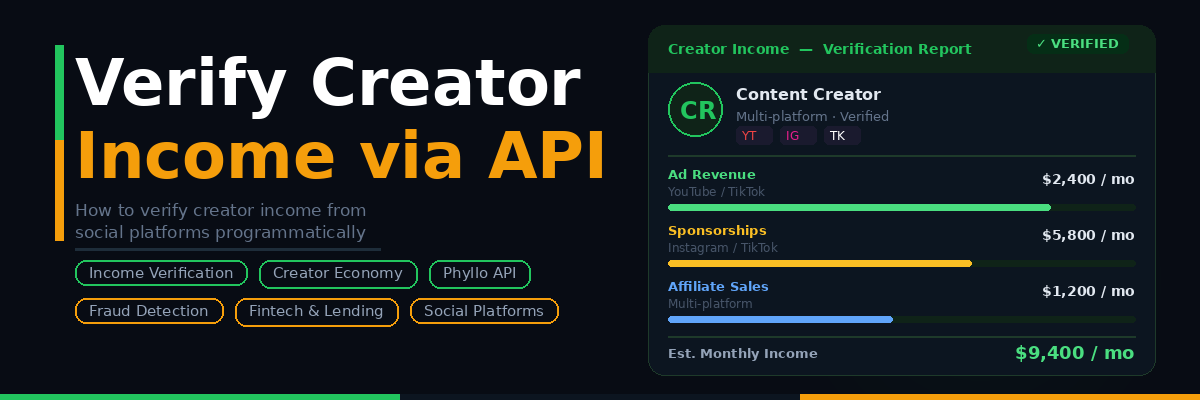
To overcome the issue, fintech platforms need technical help from the innovative Creator Income Verification APIs. These APIs help banks and fintech platforms to access the verified creator revenue data securely from diverse social platforms.
These include but are not limited to Instagram, YouTube, TikTok, Shopify, and many more. Hence, by analyzing and aggregating the earnings data, fintech companies make smart underwriting decisions and provide financial products tailored primarily to digital creators.
Our blog post will delve deep into the key functions of creator income verification APIs for underwriting and lending. Simultaneously, we analyze the way in which fintech platforms use the API to deal with the growing creator economy.
Financial Challenges Faced by the Creators
Creators hardly get their income from a single source. Instead, the content creators and influencers earn money from different platforms, which include the following:
- Brand sponsorships
- Creator funds by TikTok
- AdSense by YouTube
- Instagram collaborations
- Subscriptions on social platforms
- Commissions from affiliates
- Merchandises’ sales
- Donations from Live Streams
Such a fragmented earning structure results in many underwriting challenges. A creator may earn Rs. 3 lacs per month but still suffers rejection for a business loan based on unverifiable or inconsistent income source.
The reason is that the creators often fail to produce the documents demanded by traditional lenders. These include bank statements, salary slips, credit scores, history of employment, and tax returns. This gap demands for innovative creative earnings API fintech solutions powered by Phyllo. It standardizes and verifies the revenue earned by creators across diverse social platforms
Overview and Scope of Creator Income Verification API
A Creator Income Verification API refers to an infrastructure layer of financial data that connects the social platforms of creators with different fintech applications. The API retrieves verified earnings and monetization data securely from creator platforms and converts the same data into standard financial insights.
The APIs mainly let you access the revenue history, monthly earnings, subscriber income, platform payouts, sponsorship revenues, and engagement metrics of the audience. Simultaneously, the API gives information on any platform’s growth trends, creator’s account health, and indicators related to income consistency.
Creators thus connect their social accounts to authorize sharing of data rather than uploading statements or screenshots manually. Later, the fintech platform receives structured revenue data to underwrite and assess the risks.
Step-by-Step Functions of Creator Income Verification APIs
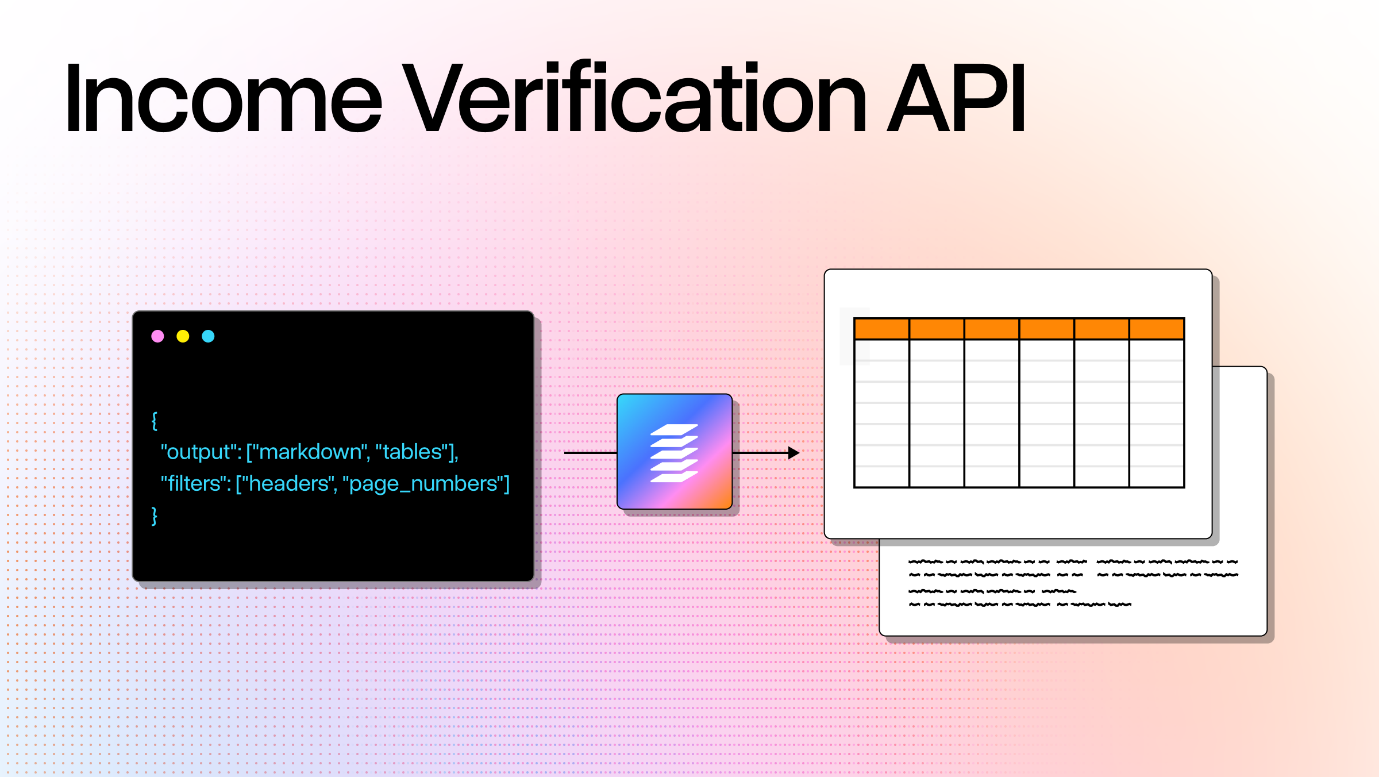
Creator Income Verification APIs follow the same process, as you expect while opening your payroll or banking verification systems. Accordingly, the steps are:
Step 1: Creator Authorization
The content creator connects diverse social platforms, like Instagram, TikTok, and YouTube via OAuth authentication.
Step 2-Data Collection
The API accumulates payout and monetization data from different connected platforms.
Step 3-Data Standardization
Data obtained from diverse social platforms is standardized into regular/consistent formats.
Step 4-Evaluation of Financial Risks
Fintech companies analyze and evaluate the following:
- Revenue volatility
- Monthly revenue average
- Engagement quality
- Audience growth
- Sponsorship consistency and
- Monetization stability
Step 5: Underwriting for Approval
In the last step, the lender uses different insights to approve business loans, credit lines, and other financial products for the creator.
The approach offers a relatively more accurate understanding of the creators’ financial stability and influencers’ income in front of the fintech companies.
Why Fintech Companies Ask for the Creators’ Revenue Data
The creator economy is growing rapidly and continuously, as many professionals are shifting towards their digital careers. However, lenders face many risks without the availability of reliable verification systems. Accordingly, the fintech companies ask for the revenue data of creators/influencers based on the following reasons:
Fraud Income Claims
Creators may manipulate the income screenshots or inflate their earnings through sponsorships. Luckily, verified Creator Income Verification APIs reduce fraud by directly pulling authenticated data from social platforms.
Complexity from Multi-Platform Monetization
Creators and influencers hardly rely on a single platform. In this situation, a creator revenue verification system collects and aggregates data from diverse income streams into a single yet unified financial profile.
Inconsistent Analysis of Cash Flows
Conventional underwriting models often face challenges based on variable income patterns. APIs allow lenders to analyze the recurring revenues and other seasonal trends.
Limited Credit History
Many young creators possess limited financial records even though they have strong earnings. Social revenue data provides alternative underwriting signals.
Real-World Scenarios of Creator Income Verification APIs
Scenario 1-A Fintech Startup Launches a Lending Platform for Influencers
A fintech startup company launches a lending platform mainly for content creators and influencers on Instagram and YouTube. Traditional banks reject the applicants, as they lack salary slips, bank statements, and other related stable income-related documents.
In this situation, the fintech company integrates the innovative creator earnings API-based fintech solution to connect directly to different social platforms, like YouTube, TikTok, and Instagram. When creators/influencers apply for loans, they authorize access to their income and monetization data. The platform thus analyzes-
- Trends in audience growth
- 1-year/12-month earnings’ history
- Consistency in platform sponsorship
- Average payout per month
- Diversification of revenues
Hence, verified monetization data and social revenue data have transformed financial inclusion in the creators’ economy.
Scenario 2-Revenue-based Financing for Creators/Influencers
A revenue-based financing startup company provides short-term working capital to influencers/creators launching their merchandise brands. For this, the company adopts API integrations to monitor its-
- Instagram engagement
- Shopify sales
- Affiliate commissions
- Growth on TikTok
- Revenue from YouTube
On the other hand, a fashion influencer has plans to launch his new clothing line and needs upfront inventory costs. Here, the lender will analyze the following rather than asking for collaterals-
- Historical revenue of the creator
- Consistency in his engagement
- Audience retention
- Monthly payouts from platforms
- History of his brand partnership
The fintech platform thus predicts the future revenue of the fashion influencer based on his audience performance and approves funds within a few hours. Also, the platform adjusts repayment automatically according to monthly earnings of the creator. Such a model is gaining popularity in today’s influencer monetization sector, as creators demand for flexible financial products aligned with consistently fluctuating revenue cycles.
Conclusion
Today, the creator economy is regularly shaping the way in which people earn money online. However, traditional financial systems fail to fulfill the requirement. Luckily, influencers and creators may choose the latest Creator Income Verification API to bridge the gap between fintech underwriting systems and digital monetization platforms.
These APIs provide verified access to the creators’ revenue and help lenders assess the risks accurately and provide financial products tailored to today’s creators. Whether it is its revenue-based finance, influencer loan, and creator banking solution, social revenue data is serving as a core underwriting signal in today’s fintech industry. To see how Phyllo enables creator income and financial services use cases including credit assessment and risk scoring, explore the dedicated product page
Frequently Asked Questions
1. What is a Creator Income Verification API?
A Creator Income Verification API enables fintech companies to access verified earnings and monetization data from creator platforms such as YouTube, TikTok, Instagram, and Twitch for underwriting and lending purposes.
2. Why do fintech companies need creator revenue data?
Traditional underwriting systems struggle with irregular income from creators. APIs provide structured financial insights that help lenders evaluate risk more accurately.
3. What platforms can creator income APIs connect to?
The Creator Income Verification APIs may connect to YouTube, Instagram, TikTok, Patreon, Twitch, Shopify, affiliate platforms, and other monetization ecosystems.
4. How does creator revenue verification reduce fraud?
Instead of relying on screenshots or manual uploads, APIs pull authenticated revenue data directly from creator platforms, improving trust and accuracy.
5. What financial products use creator income verification?
Common use cases include creator loans, revenue-based financing, credit lines, creator banking products, and insurance underwriting.
6. How does influencer monetization affect underwriting?
Stable sponsorships, subscriptions, and recurring audience engagement can indicate reliable future earnings, improving underwriting confidence.
7. Is creator revenue data shared securely?
Yes. Most Creator Verification APIs use OAuth authentication, encryption, and consent-based access systems to ensure creator data privacy and compliance.
What is a creator income verification API?
A creator income verification API connects fintech platforms to a creator's social accounts and returns verified earnings, payout history, and engagement data for underwriting.
How does creator income verification work step by step?
Five stages: the creator authorizes access over OAuth, the API collects payout data, standardizes it, scores risk signals, and then the lender approves the loan or credit line.
Which platforms can a creator income verification API connect to?
Coverage includes YouTube, Instagram, TikTok, Patreon, Twitch, Shopify, and affiliate networks, so ad revenue, subscriptions, merch sales, and commissions land in one profile.
Why do lenders reject creators who earn well?
Traditional underwriting wants pay slips, bank statements, and tax returns. A creator pulling Rs 3 lakh a month across several platforms rarely has any of those documents to show.
How does creator revenue verification reduce fraud?
Pulling authenticated payout data straight from the platform cuts out inflated screenshots and padded sponsorship claims, so lenders decide on what the platform actually paid.
What signals do lenders score in creator income data?
Lenders weigh revenue volatility, average monthly payout, audience growth, engagement quality, sponsorship consistency, and monetization stability rather than one credit score.
What financial products use creator income verification?
Creator loans, revenue-based financing, credit lines, creator banking, and insurance underwriting all use it. Repayment can adjust automatically to monthly platform earnings.
Is creator revenue data shared securely?
Yes. Access runs on OAuth authentication, encryption, and consent-based permissions, so the creator approves each connection instead of emailing screenshots or bank statements.
Does Phyllo offer creator income verification for lenders?
Yes. Phyllo is a creator data infrastructure platform, and its financial services product covers verified creator income, credit assessment, and risk scoring across platforms.