
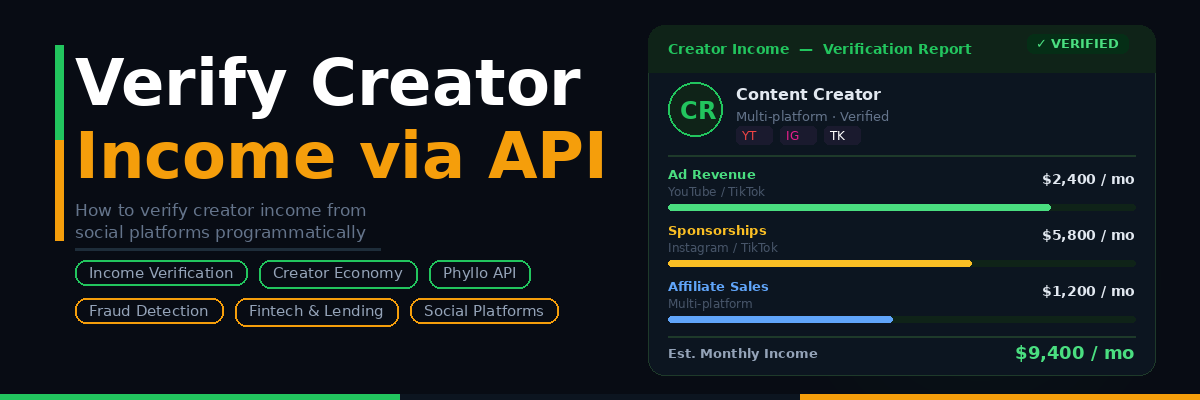


Verifying creator income through social platform APIs helps businesses and platforms access accurate earnings data directly from trusted sources. It enables automated validation of revenue from ads, brand deals, and affiliate programs. This improves transparency, reduces fraud, and streamlines decision-making for partnerships or financial services. As APIs evolve, they are becoming essential tools for reliable creator economy insights.
- Creator income verification via API pulls consented earnings and engagement data from Instagram, YouTube and TikTok, replacing manual bank statements.
- Platforms rarely expose exact revenue, so APIs estimate earnings from proxy metrics like views, follower growth and engagement rates.
- Ad revenue math is CPM times views divided by 1,000, with Indian CPMs at Rs 50 to Rs 500 per 1,000 views.
- Brands catch fake followers before overpaying, while fintech lenders use CPM based income estimates to underwrite creator loans.
- Best practices include token based auth, HTTPS on every call, key rotation and pre-built connectors instead of custom scrapers.
What is Creator Income Verification via API?
The creator income verification with the help of API refers to an automated and secure process. It allows businesses to verify the earnings, engagement, and followers of a content creator instantly and directly from social platforms. Whenever creators connect their accounts, they share their first-party data securely. The income verification API thus eliminates the need to submit bank statements and screenshots manually.
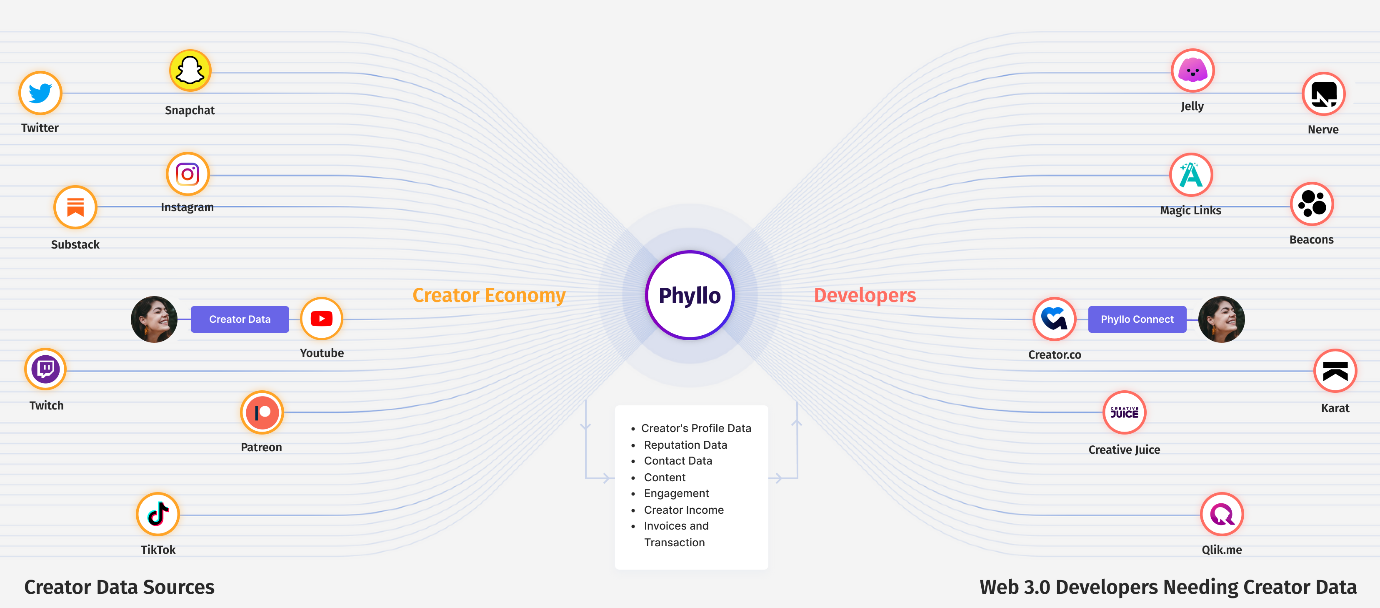
Detailed Understanding of the Creator Income Verification via API
The creators’ economy has now evolved into a vast million-dollar ecosystem. Here, influencers make money through sponsorships, ads, affiliate sales, and subscriptions. However, brands, fintech platforms, agencies, and marketplaces often face a common challenge of verifying the creators’ income with accuracy. Another problem is that creators often earn via fragmented channels, which further make manual verification almost impossible.
Here comes the role of Application Programming Interfaces. APIs and other third-party data providers leverage social platforms to let businesses access the estimated earnings and performance metrics of content creators programmatically. In simple words, API validates the income streams and status of a creator in real time.
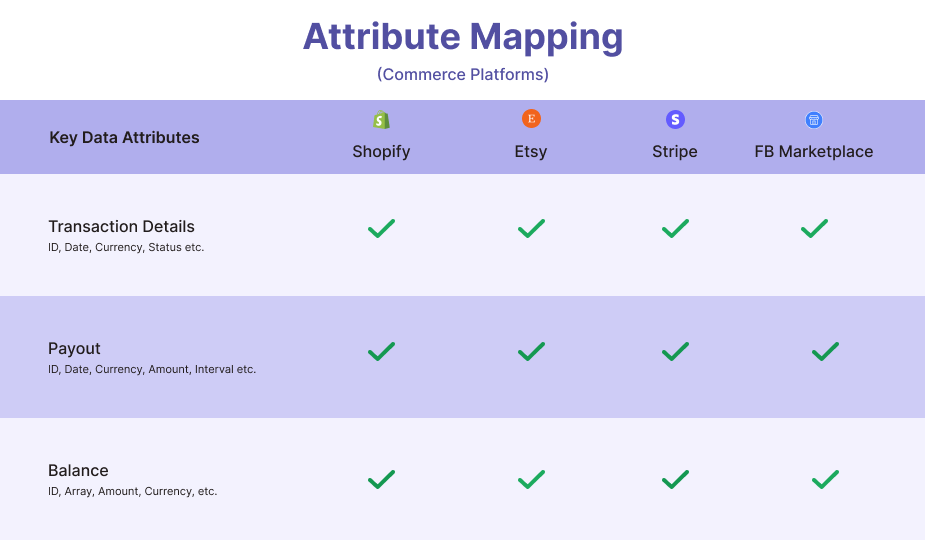
Types of Data/Information Provided by Income Verification API
Social platforms, like Instagram, YouTube, Facebook, TikTok often do not expose their creators’ income directly. In this situation, any top-class income verification API, like Phyllo API provides proxy data, like:
- Likes, comments, and views,
- Followers’ count and their growth
- User engagement rates
- Frequency of contents
- Audience demographics
Later, the API estimates the income based on the collected data by the help of monetization models. These include-
- Cost per 1,000 views abbreviated as CPM
- Rates of sponsorship
- Affiliate conversion rates
In most cases, an automated income verification API displays real-time metrics across different social platforms. Accordingly, developers may track the creators’ performance to estimate their earnings programmatically. Likewise, an influencer API enriches the creator profiles with average monthly income, quality of engagement, and audience insights to ease the verification process.
Common Types of Income Verification API for Creators
Whether you refer to Phyllo’s API or other income verification APIs, they are available in following categories:
- Platform Analytics APIs
Platform Analytics APIs are available as Instagram Graph APIs, YouTube Data APIs, and TikTok APIs. These APIs provide watch time, video views, and engagement metrics.
- Third-party Influencers APIs
Third-party influencer APIs provide enriched datasets in the form of estimated earnings, cross-platform profiles, and the detection of fake followers.
- Benchmark and Monetization Models
Benchmark and monetization tools and APIs use engagement-to-revenue ratios and CPM benchmarks. For instance, a few monetization tools estimate income according to the niche, views, and geography based on updated industrial benchmarks.
What are the Methods to Verify the Creators’ Income with API?
Automated income verification for creators via API mainly involves the use of special third-party platforms, like Phyllo to secure access to revenue data specific to social platforms. Simultaneously, the financial API analyzes the creators’ bank statements. Accordingly, APIs adopt the following methods to verify the creators’ income.
- Creator Economy APIs
Phyllo API allows direct platform integration and allows creators to give their consent for sharing data directly from Instagram, YouTube, Shopify, Discord, and other social platforms. Accordingly, you get real-time access to earnings, revenue based on activities, and subscribers’ counts.
- APIs for Bank Account Verification
APIs for the bank account verification confirm that the accounts provided by content creators are active and their genuine/real profiles. These APIs may even use penny-drop mechanism to verify the accounts’ ownership instantly.
- Form 26AS APIs and Income Tax Returns APIs (India-specific)
These APIs allow access to the officially filed tax documents of creators in India to provide a comprehensive view of their income streams.
- EPFO Passbook APIs (India-specific)
If a content creator was a government employee in India, such APIs may automatically collect details on the Employee Provident Fund to prove their income stability.
Real-world Scenarios of Social Creator Verification via APIs
Scenario 1-Verification of the Influencers’ Sponsorship Rates by the Brand/Online Business
Online businesses and brands often end up overpaying their influencers based on inflated follower counts or fake user engagement.
How APIs will Help Brands
Brands refer to APIs to get details on likes or comments ratio and other engagement metrics. They also check the authenticity of a creator’s audience and estimated earnings. APIs especially help brands by detecting fake follows and compare the estimated value vs claimed rates of an influencer. A few APIs also provide income estimates per creator profile to help brands validate their pricing claims.
Outcomes Obtained from APIs
Brands and online businesses have calculated their influencers or creators’ pricing accurately, detected and prevented fraud, and obtained improved ROI on advertisement campaigns.
Scenario 2-Fintech Platforms Need to Verify the Eligibility of the Creators’ Loan
Fintech companies willing to offer loans use automated income verification APIs to verify the income of influencers or creators.
How APIs Help Fintech Companies/Platforms
Fintech platforms/companies use verification APIs to integrate the following:
- YouTube APIs to fetch the number of views and subscribers
- Instagram APIs to fetch the user engagement rates
- Third-party APIs to fetch the estimated income of creators per month
Based on the obtained inputs, APIs calculate the income by using CPM benchmarks and validates consistency based on historical data.
Outcomes Obtained by Verification APIs
Fintech companies approve the creators’ loan faster, reduce fraud-related risks, and automate the underwriting process.
Key Steps/Models in Income Estimation/Verification of Content Creators via API
Most platforms never expose direct earnings of their creators or influencers. In this situation, API rely on different models and follow a few key steps to perform the process-
Step 1-Ad Revenue Estimation
APIs calculate the income of content creators based on the cost per view, which ranges between Rs 50 and Rs 500 (approximately $0.60–$6 USD) per 1,000 views in India, depending on the specific niche. Accordingly, the formula used is:
Earnings=CPM X (Views/1000)
Step 2-Sponsorship Estimation
This type of estimation model is based on the engagement rate and the followers’ count. For instance, a creator with 100K followers will get anything from Rs 10K to Rs 50K per post (approximately $120–$600 USD in India).
Step 3-Affiliate Revenue Estimation
Affiliation revenue estimation model tracks content creators and influencers according to the number of clicks and the conversion rates.
Step 4-Multi-Platform Aggregation
A few of the advanced APIs will combine YouTube ads, TikTok Live Gifs, and Instagram brand deals to provide a unified estimate of the creators’ income.
What are the Best Practices of Creator Verification and Implementation via API?
Content creator verification on social platforms via API needs an automated, streamlined, and a secure approach to confirm the creators’ identities and metrics across different platforms. It reduces reliance on fraudulent-prone and manual methods. Hence, brands and online businesses using API must follow a few best practices to verify the creators:
- Secure Authentication
Brands should implement token-focused and strong authentication instead of static API keys to allow only authorized applications to initiate the requests for verification.
- Data Security
One should always use HTTPS for every API call to encrypt the transit data and thereby, avoid interception problems.
- Leverage the Dedicated APIs
Use a special identity verification tool to offer pre-built connectors for Instagram, TikTok, YouTube, and other creator platforms instead of building customized scrapers.
- API Key Management
Make sure to handle API keys securely with the help of environment variables instead of hardcoding them and implement the rotation process.
Brands and other users who want to implement an automated verification API should consider the following points to implement it properly.
- Data Privacy
Make sure of strict compliance with the mandatory data privacy regulations by requesting the vital information.
- Accuracy and Speed
Prioritize the solutions, which offer accurate and rapid validation to avoid any bottleneck in the onboarding process.
- Versioning and Documentation
Brands and online businesses must maintain a clear documentation and apply versioning for the creator verification API to deal with changes without violating integrations.
Conclusion
Verification of creators’ income on social platforms via API is vital to build trust in the content creator economy. By combining third-party APIs, platform analytics, and intelligent estimation models, businesses gain a scalable, data-driven, and reliable view of the social creators’ earnings. Whether you are a startup, fintech, SaaS platform, or brand, API-based verification allows smart decisions, reduces fraud, and explores many new opportunities in today’s fast-growing ecosystem of content creators. With consistent evolution of APIs, expect more accuracy, transparency, and automation in tracking and validating the creators’ income.
Frequently Asked Questions
1. Can APIs show exact creator income?
No, most APIs provide estimated income, not exact earnings, because platforms don’t expose revenue data publicly.
2. Which platforms support income verification via API?
Major platforms supporting income verification on social platforms via API are YouTube, Instagram, and TikTok via analytics APIs and third-party tools.
3. How accurate are income estimates?
Accuracy depends on the data quality, CPM assumptions, and authenticity of customer engagement. Advanced APIs also provide reliable estimates based on real-time analytics.
4. Can APIs detect fake followers?
Yes, many influencer APIs allow fake follower detection and display engagement authenticity scores.
5. Is creator income verification legal?
Yes, until the data is publicly available or user-consented and the APIs comply with platform policies, creator income verification stays legal.
6. What industries use creator income verification?
Loans, credit scoring, Fintech, influencer marketing, ad-tech platforms, and creator marketplaces are a few industries that use creator income verification via API.
Can income verification APIs show a creator's exact earnings?
No, most APIs return estimated income rather than exact earnings, because social platforms never expose revenue data publicly. A consented account connection gives the closest read.
What data do creator income verification APIs return?
APIs return proxy metrics: views, likes, comments, follower growth, engagement rates, posting frequency and audience demographics, then estimate earnings from those numbers.
How do APIs estimate a creator's ad revenue?
Ad revenue is CPM multiplied by views divided by 1,000. In India CPM runs about Rs 50 to Rs 500 per 1,000 views, roughly $0.60 to $6, depending on the niche.
Which platforms support creator income verification via API?
YouTube, Instagram, TikTok and Facebook are the main ones, reached through analytics APIs such as the Instagram Graph API or through third-party creator data providers.
Can income verification APIs detect fake followers?
Yes. Many influencer APIs flag fake followers and return engagement authenticity scores, so a brand can compare a creator's claimed rate against real audience value.
Is verifying creator income through APIs legal?
Yes, provided the data is public or user consented and the API follows each platform's policies. Creators grant access to their own first-party data before anything is pulled.
How does Phyllo help verify creator income?
Phyllo is a social data infrastructure platform with consented integrations to Instagram, YouTube, Shopify and Discord, returning real-time earnings, revenue by activity and subscribers.
Which industries use creator income verification?
Fintech lending, credit scoring, influencer marketing, ad tech and creator marketplaces use it, mostly to price sponsorships fairly and underwrite loans for creators.
What are the best practices for a creator verification API?
Use token based authentication instead of static keys, send every call over HTTPS, store keys in environment variables with rotation, and version the integration with clear docs.