


Continuous social media screening helps organizations identify evolving risks beyond one-time background checks. It ensures ongoing compliance, reputation protection, and early detection of behavioral red flags. As regulations tighten, continuous monitoring is becoming essential for hiring, immigration, and security decisions.
- Social media screening is now mandatory for US visa applicants: H-1B and H-4 from December 15, F, M, and J from June 15.
- Applicants must make every account public, from Facebook to TikTok and WeChat, and disclose handles from the past five years.
- Screening combines AI keyword analysis with human review to flag hate speech, extremist ties, and threats before a visa decision.
- Deleting accounts backfires since sites like Facebook retain data for weeks or months and old profiles still surface in checks.
- Applicants can run Phyllo's automated screening tool, which scans linked profiles and returns red flags within minutes.
The year 2025 has shown a huge shift in the screening process of every visa applicant, especially for the individuals applying for their visas to travel to the United States. The latest statistics revealed that the US government mandated social media screening of H-4 and H-1B visa applicants from December 15. Before this, the US government and consular departments have mandated social screening of J, F, and M categories of non-immigrant visa applicants from June 15.
Accordingly, every individual whether he is a male, female, student, worker, or dependent/family member needs to change their social media settings from ‘private’ to ‘public’ for government reviewal and cooperate in the social media screening process. The main objective of the recent moves are ongoing efforts by the United States to boost national security and make sure that visa applicants fulfill the mandatory criteria for entering the country.
Scope of Continuous Social Media Screening
The latest law revealed that applicants need to make their every social media account public and report the same to the immigration authorities. These include Facebook, LinkedIn, Twitter/X, Instagram, Tumblr, Reddit, Threads, and YouTube. Excluding this, if visa applicants have their accounts/handles in other less common or Chinese social media platforms, like WeChat and TikTok, personal websites, and unlisted blogging spaces, they need to share them as well. In simple words, immigration authorities will track every professional and personal social media activity of an individual. These include the uploaded photos or videos, posts, previous comments, tagged posts or pictures, likes, shares, and comments.
Key Steps in Continuous Social Media Screening
Continuous social media screening conducted by immigration authorities and consular departments involve the following key steps-
Collection of Publicly Available Contents
Agencies and visa applicants use certain software tools or manually collect and review publicly available contents from diverse social media platforms, blog posts, and other online mediums. However, the data excludes private messages and information present behind privacy settings.
Analysis of Patterns and Keywords
In the second step, visa applicants use AI-powered automated social screening tools to analyze their content for identifying red flags. These include bigotry, racism, hate speech, violent ideologies, criminal language or any forms of threat, and involvement with extremist groups.
Review and Decision Making
Once the automated tools generate the flagged results, human analysts verify the content and judge their relevance. The final decision of issuing or denying a visa, resending a nomination, or assigning clearance depends solely on the collected combined evidence.
How to Adjust to Privacy Changes
As discussed here, the US embassy has clearly said that immigration authorities will thoroughly review the social media accounts of the visa applicants. Here, the objective is to make sure of the credibility and accuracy of the information shared by the applicants and confirm that their affiliations and actions align with the latest US visa conditions. In this situation, visa applicants regardless of their categories must review their social media profiles carefully to avoid themselves expose inadvertently to any private information, which may be deemed irrelevant or sensitive to the application process.
How Phyllo’s Automated Social Screening Solutions Help in the Process
Today, almost every individual has multiple accounts in diverse social media platforms. Also, social media users spend hours while sharing their favorite posts, uploading photos/videos, watching reels followed by likes and comments. In this situation, tracking every activity on different social media websites is a challenging task. Here comes the role of Phyllo’s AI-powered social screening solutions.
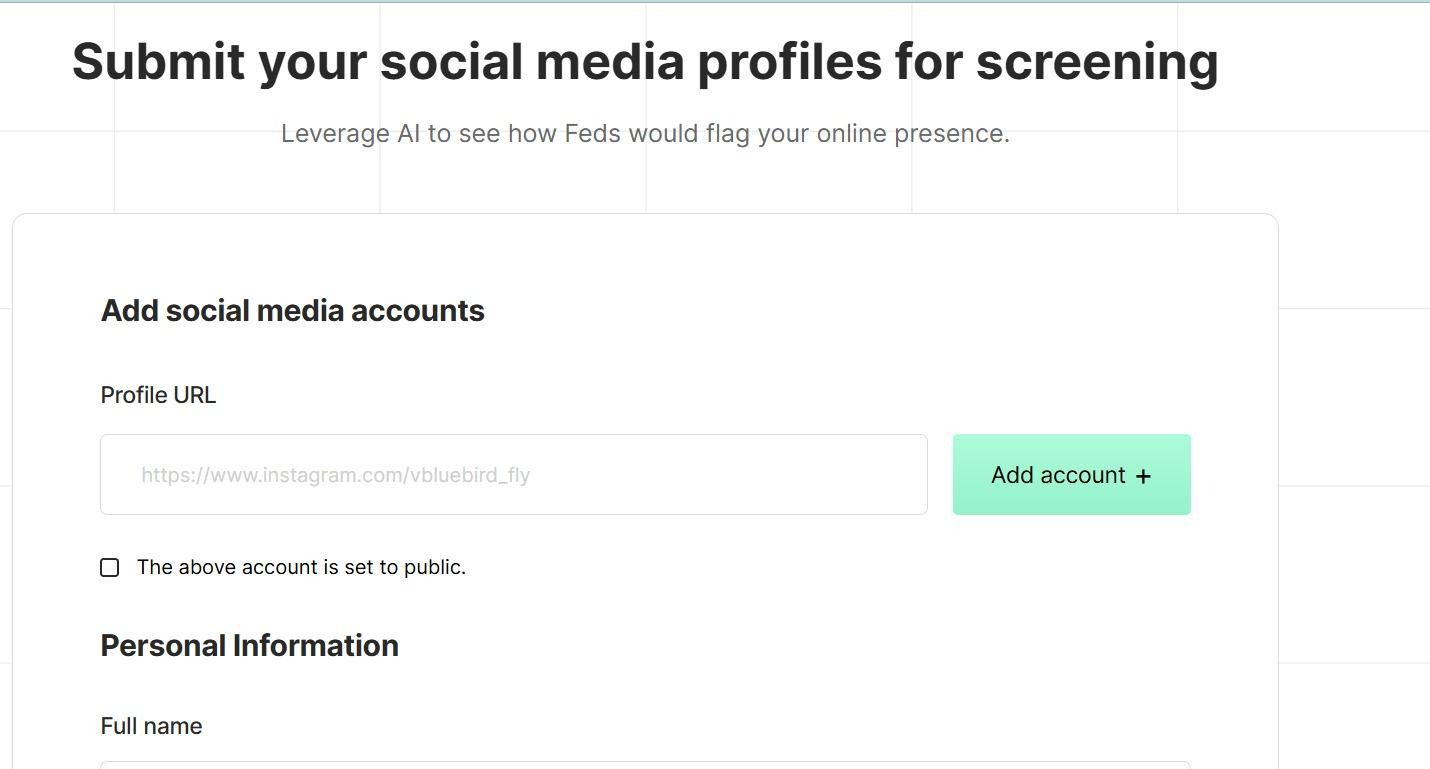
Here, users only need to share the links of their social media profiles and fill a form to highlight the personal details. Also, applicants need to pay a fixed mandatory fee to use the Phyllo’s AI solution and get their results, including the red flags within a few minutes. In this way, Phyllo’s Social Media screening tool eliminates the need of manually screening your social media accounts needed before the visa application.
Additional Tips for Visa Applicants to Ease the Process
Delete Sensitive Posts, Comments, and Information
Applicants should delete any sensitive posts, comments, or other related information before changing their social media accounts’ settings to public. Especially, minor social media users should do this activity under the supervision of their adult parents or guardians.
Never Commit the Mistake of Deleting Social Media Accounts
Many visa applicants commit the common mistake of deleting their Facebook, Instagram, or related social media accounts. However, it is never a foolproof method to avoid investigation or scrutiny. Many social media sites retain the users’ data for a few weeks or even a few months even after users delete their accounts. Indeed, old accounts will continue to display during the background checks.
Keep Accounts Public and Safe Until You Enter the United States
Visa applicants do not receive any official notification related to the timeframe up to which visa applicants should set their social media accounts to public. However, if you want to be on the safe side, make sure to keep the accounts open/public right from the time of submitting your visa application to up to the time you receive your visa and enter the United States.
Why Continus Social Media Screening is Vital
Continuous social media screening has become a mandatory vetting requirement for visa immigration mainly because of national security concerns. It allows government officials to identify any potential threat and verify the background of visa applications in today’s consistently increasing digital realm. Common reasons and benefits of continuous screening are as follows-
Improved National Security
Government officers perceive social media as a major forum associated with radicalization, extremists’ sentiments, and various terrorist activities. Screening helps visa officials to identify the early signs of threats and connections of individuals with violent movements or hate groups, which are hardly apparent via traditional checks.
Background and Identity Verification
Under background and identity verification, applications need to provide their diverse social media handles from the last five years to let consular officers verify the information they provide in the application forms. These details include the identity, employment history, and travel purpose. By doing so, visa and immigration officers will detect fraud and other inconsistencies.
Assessment of Intent and Admissibility
Authorities and officials use online content to assess the intentions, and character of an applicant while he/she in the country and whether the activities performed or affiliations align properly with the mandatory visa regulations. This will include identifying hostile attitudes towards the country, people, or institutions.
Avoid Misuses of Visas
Another prime reason behind continuous social media screening is that it makes sure that applicants, whether they are of exchange visitors, student visitors, workers, or dependents comply strictly with the mandatory terms of the admission. Visa or immigration vetting via continuous screening guarantee that the applicants do not engage in activities that are contrary to the laws and interests of the host nation.
Allows Regular Monitoring
Screening process is no longer limited to only the visa application process. Instead, authorities monitor the social media of visa holders even after they issue a visa to the applicants. Applicants must remember that visa is simply a privilege and not any fundamental right. Hence, if the immigration officers detect violations via ongoing screening, they may deport the issued visa as well.
Conclusion
Continuous social media screening and vetting associated with the visa process offers many benefits based solely on enhancing the national security, verifying the individuals’ identities, and detecting the prospective risks, which are not apparent via traditional application methods. However, visa applicants should work responsibly while changing their settings to public, use Phyllo’s social screening tool to detect and edit/delete their suspected posts in advance and keep their accounts safe and as per the visa vetting norms for your smooth application process.
Frequently Asked Questions:
What is continuous social media screening?
Continuous social media screening is an ongoing process of monitoring publicly available social media content to identify potential risks, behavioral changes, or policy violations over time, rather than conducting a one-time background check.
Why is one-time social media screening no longer sufficient?
A single screening offers only a snapshot in time. Since individuals’ online behavior can change rapidly, continuous screening helps organizations detect new risks, emerging threats, or non-compliant activities that may arise after initial approval or onboarding.
Which industries are making continuous social media screening mandatory?
Industries such as immigration and visa processing, financial services, education, healthcare, defence, and corporate hiring are increasingly adopting continuous screening to ensure ongoing compliance, safety, and reputational protection.
How does continuous screening help with risk management and compliance?
It enables early detection of red flags like extremist content, hate speech, fraud indicators, or policy violations. This proactive approach helps organizations maintain regulatory compliance, reduce legal exposure, and respond quickly to evolving risks.
Is continuous social media screening privacy-compliant?
Yes, when done responsibly. Modern screening solutions analyze only publicly available data and follow strict data protection, consent, and regulatory guidelines, ensuring ethical monitoring while respecting individual privacy.
Why is social media screening mandatory for US visa applicants?
The US government uses social media screening to boost national security, verify applicant identity and intent, and spot threats that traditional background checks miss.
Which US visa categories require social media screening?
F, M, and J visa applicants have faced mandatory screening since June 15, and the requirement extended to H-1B and H-4 applicants from December 15, covering dependents too.
Which social media accounts must visa applicants disclose?
Applicants must report every handle from the last five years, including Facebook, LinkedIn, X, Instagram, Reddit, Threads, and YouTube, plus TikTok, WeChat, and personal sites.
Should I delete my social media accounts before applying for a US visa?
No, deleting accounts rarely works because platforms retain user data for weeks or months and old profiles still appear in checks. Remove sensitive posts and go public instead.
How long should visa applicants keep their accounts public?
There is no official timeframe, so the safe approach is keeping accounts public from the moment you submit the visa application until you receive the visa and enter the United States.
What red flags do officers look for during social media screening?
Screeners flag hate speech, racism, violent ideologies, criminal language, threats, and links to extremist groups. AI tools surface the content and human analysts verify it.
How does Phyllo help with social media screening for visas?
Phyllo's AI-powered screening tool checks the profile links you share and returns red flags within minutes, so applicants can edit or delete risky posts before the visa application.
Does social media monitoring continue after a US visa is issued?
Yes, authorities keep monitoring visa holders after issuance, and violations detected through ongoing screening can lead to revocation or deportation, since a visa is a privilege.





.avif)