


TL;DR Summary: This walkthrough explains how to use the Instagram Graph API in 2026 to gather influencer analytics such as reach, impressions, engagement, and audience insights. It covers OAuth setup, required permission scopes, and the key API endpoints marketers and developers rely on. The guide also highlights what data Instagram now exposes versus what remains restricted, with practical code examples and tips for combining API data with social listening tools.
- The Instagram Graph API returns likes, comments, saves, reach, impressions, and audience demographics, but only for Business and Creator accounts.
- Audience insights cover age bands such as 18 to 24 and 25 to 34, gender split, top cities and countries, and the hours followers stay active.
- Access starts with a Meta Developer app, OAuth redirect setup, and scopes such as instagram_business_manage_insights for demographics.
- Individual follower identities, private account activity, and ranking signals stay hidden, so Instagram metrics alone cannot prove audience authenticity.
- Phyllo wraps Instagram access in one unified API covering creator content metrics, earnings data, and multi-platform profiles.
What does the Instagram Graph API return for influencer analytics?
The Instagram Graph API returns engagement metrics (likes, comments, saves, reach, impressions), audience demographics (age, gender, geography), and content performance data for Business and Creator accounts — giving influencer platforms the structured data they need to evaluate creators before campaign investment.
Gone are the days, when influencer marketing has remained confined to only a few follower-count comparisons. Today, it has become a data-driven discipline powered by many analytics platforms, APIs, and diverse machine learning models.
Brand, creator marketplaces, and agencies in 2026 are increasingly relying on the Instagram Graph API to measure their campaign outcomes, collect and analyze the performance insights, and evaluate the authenticity of the influencer audience before their marketing budget investments.
However, modern influencer programs need deep visibility into the engagement quality, audience demographics, content performance, reach trends, and authenticity indicators. Here, comes the role of a valuable data source called the Instagram Graph API and the corresponding Instagram Graph API analytics.
Our guide will highlight a few of the vital Instagram Graph API returns for this 2026. Also, you will learn the steps related to set up authentication, and the endpoints matter most to conduct influencer analytics. Merely API data and the corresponding metrics cannot give a complete picture of an influencer's effectiveness. For this reason, modern analytics platforms regularly combine Instagram data with social listening analytics technologies.
What the Instagram Graph API Returns in 2026
The Instagram Graph API is the official interface powered by the Meta platform. It accesses both Instagram Creator and Business account data. As per the latest Meta update of 2026 or the Instagram API Analytics 2026, developers may retrieve a wide range of metrics. These include the media performance data, account information, customer reach and impressions, follower counts, audience demographics, story insights, and content publishing data.
Also, you will get the engagement metrics and video performance metrics. Each dataset allows influencer marketing platforms to prepare campaign reports, create dashboards, and create intelligence systems.
Common Instagram API data categories include the following-
- Account-level metrics, which consist of following counts, followers, account category, profile information, and user name.
- Content-level metrics include the likes, shares, comments, reach, impressions, saves, and video views.
- Audience insights will provide information related to age distribution, geographic location, gender distribution, and active audience periods.
Every metric helps brands to evaluate the influencer audience authenticity and performance while selecting creators for collaborations.
OAuth Setup and Permission Scopes
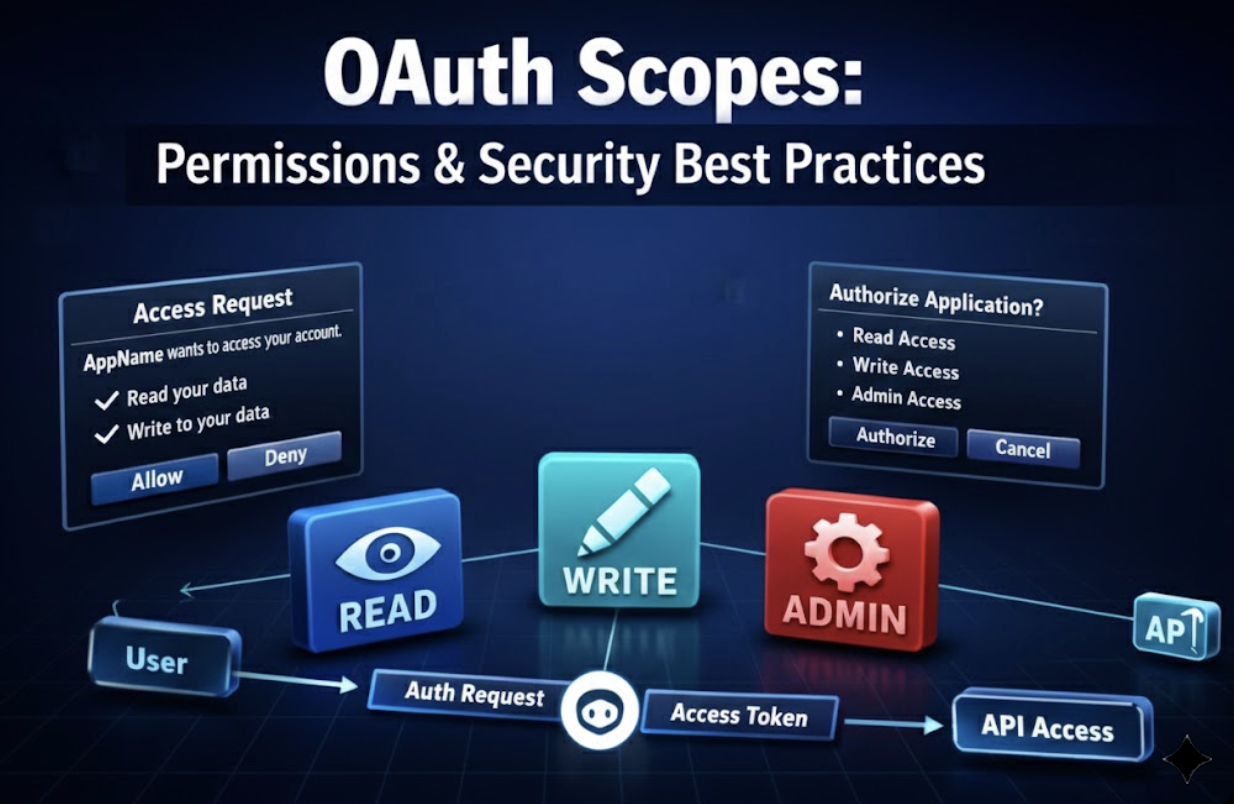
Developers should implement the OAuth setup and authentication process as mandated by Meta. For this, one should proceed through the basic workflow as-
- Register the application in the official Meta Developer Portal
- Configure OAuth to redirect the URLs
- Request for authorization of users
- Access tokens by exchanging the authentication codes
- Refresh tokens based on the requirements
Common Permission Scopes
If you want to implement the updated Instagram Graph API Analytics with its Login, look for the following permission scopes-
Instagram_business_basic
This will read the core metadata or instagram api data of your individual or business profile, which include your account name, ID, and username.
Instagram_business_content_publish
This permission is necessary for your app to publish various feed posts, Reels, and videos on behalf of your business account.
Instagram_business_manage_comments
Grant permissions to reply to, view, and delete comments needed for community moderation.
Instagram_business_manage_messages
Needed for Instagram business profiles to read, properly organize, and reply to various Direct Messages on Instagram.
Instagram_business_manage_insights
Gives your business application to various performance analytics, media metrics, and audience demographics.
However, the exact permission scopes depend solely on the specific metric that you want to access.
Key Endpoints for Influencer Analytics
Many Instagram Graph API Analytics and their endpoints are used for different influencer intelligence platforms. These include the following-
User Profile Endpoint
User profile endpoint retrieves the username, type of account, following, and follower counts, along with the media count. Common examples of use cases are profile verification, identification of creators, and creation of influencer databases.
Media Endpoint
Media endpoint supplies information related to reels, posts, carousels, and stories. These are useful to calculate the posting frequency, track the engagement trend, and content analysis.
Insights Endpoint
Insights endpoint provides metrics on saves, reach, impressions, website clicks, and profile visits. This endpoint also acts as a foundation of the entire engagement authority checking system.
Audience Insights Endpoint
Audience insights endpoints are needed to understand the age groups, audience locations, and gender breakdowns. Many brands use the audience insights endpoint to match creators with various target customer segments.
Audience Demographics: What's Available
Audience demographics are also valuable datasets available needed for successful influencer campaigns. The Instagram API Analytics 2026 supplies insights into the following-
Age Distribution
Age distribution categorizes the audience under different age groups. These include between 18 and 24 years, 25 and 34 years, 35 and 44 years, and so on. Accordingly, brands may determine whether the audience of a content creator matches with the campaign objectives.
Gender Breakdown
Gender breakdown data often consists of male and female audience percentages with a few unspecified categories.
Geographic Insights
Brands may analyze the top cities, top countries, and the concentration of regional audiences. For instance, the companies targeting Indian consumers will prioritize influencers who have heavily concentrated audiences in India instead of global audiences.
Audience Activity Patterns
Platforms may identify the most active days, peak engagement hours, and optimum posting schedules. Such insights will help in improving the campaign timing and strategies related to content distribution.
Engagement Data: What's Returned vs What's Hidden
Many developers and brands have a common misconception that Instagram can provide unlimited visibility and engagement. However, reality shows that the developers get substantial metrics only instead of getting complete behavioral data at the audience-level. Accordingly Instagram Graph API Analytics will provide the following API Returns-
API Returns
Developers may access the reach, impressions, likes, comments, saves, shares, video views, story metrics, and other related API Returns.
Hidden Facts/Limitations
Instagram often prevent developers to access the following-
- Complete audience identities
- Individual and follower behaviors
- Activities performed by private accounts
- Detailed algorithms and signals
- Hidden rank factors
Based on the limitations, influencer platforms often provide API insights combined with proprietary models. For instance, creators may have outstanding engagement rates but may have suspicious audience patterns. To identify the issue, companies regularly combine API data with the API-based audience quality score and other fraud-detection signals.
Combining API Data with Social Listening
Merely, API data and the corresponding API metrics cannot give a complete picture of the effectiveness of an influencer. For this reason, modern analytics platforms regularly combine Instagram data with diverse social listening technologies.
Scope of Social Listening Tools
Social listening tools may analyze the sentiments, brand mentions, trending topics, audience discussions, and hashtag activity.
Significance of Combining API Data and Social Listening
Let us suppose we have two Instagram influencers who have identical engagement rates. The 1st influencer gets positive comments with authentic discussions while the 2nd one gets repetitive comments from low-quality accounts. In this situation, the Instagram API may highlight identical engagement metrics but sentiment analysis will highlight many big differences. The combination of social listening and API data will provide a strong assessment of the following-
- Audience relevance
- Campaign suitability
- Brand safety
- Influencer audience authenticity
Hence, many enterprise platforms often blend their API data with several external social intelligence systems.
How Phyllo Simplifies Instagram Analytics Access
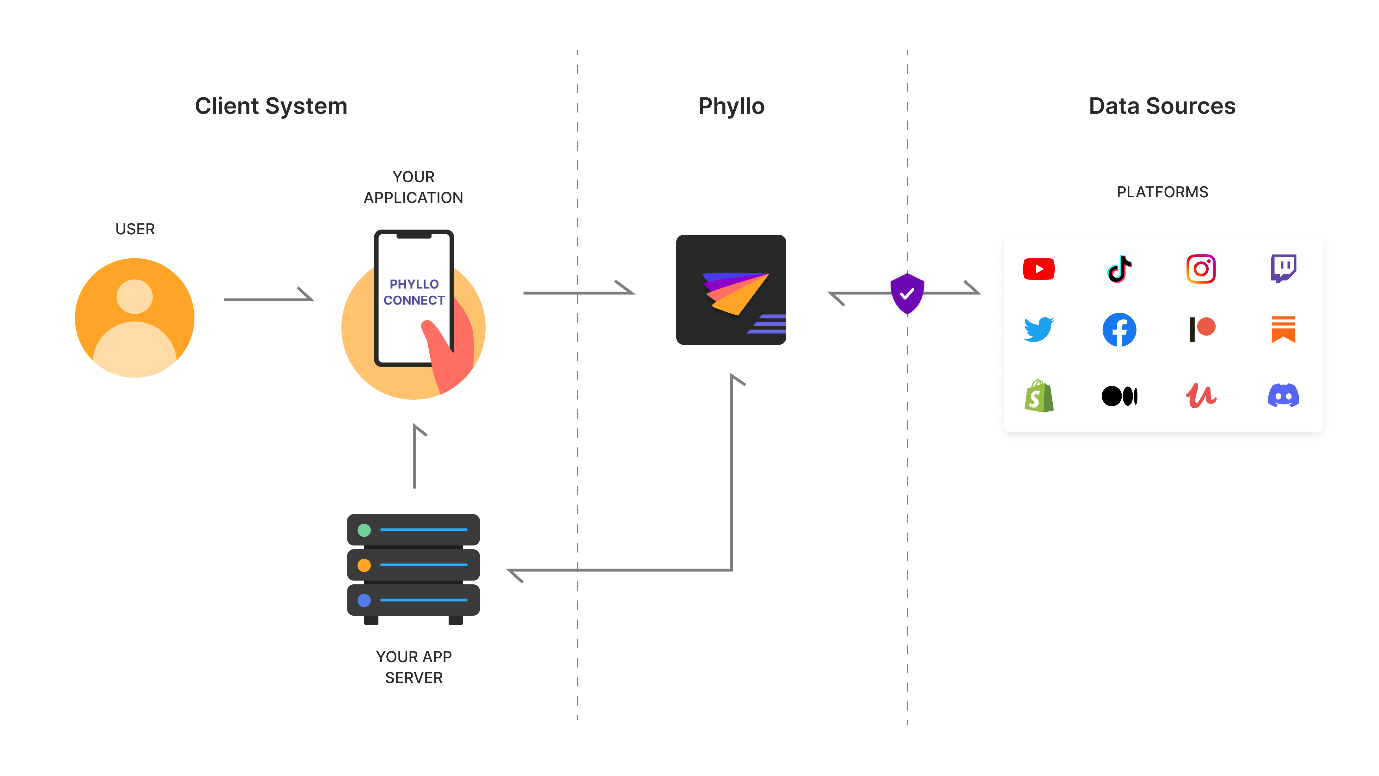
Integrating directly with Meta APIs may be complex because of dealing with token refresh, OAuth management, permission reviews, version updates, and rate limit management. Luckily, Phyllo simplifies the process with the help of a unified API infrastructure designed primarily to allow creator data access. A few major ways, Phyllo can simplify the Instagram analytics access via its Graph API Wrapper for developers are as follows-
- Connect different creator accounts faster
- Provides access to standard data models
- Reduces overhead in engineering
- Improves onboarding-related experiences
Luckily, Phyllo's Instagram API simplifies the process with the help of a unified API infrastructure designed primarily to allow creator data access:
- Content metrics
- Earnings-related information
- Multi-platform creator profiles
- Comparisons on the performance of each platform
Such a wide dataset allows organizations to create advanced influencer vetting systems to plan various campaigns and identify the creators.
Real-world Scenario
A global beauty company wants to launch its new campaign by targeting women between the age group of 18 years and 34 years in India. The marketing team evaluates 500 prospective creators by the help of Instagram Graph API data. For this, the company follows a step-by-step procedure, as we have mentioned here-
Step 1: Collect Audience Insights
The Instagram platform of the global beauty company will retrieve the audience age groups, geographic distribution, and gender demographics.
Step 2: Analyze Engagement
In this step, the marketing team will review the reach, impressions, story performance, and engagement rates.
Step 3: Run Authenticity Screening
A few models will also evaluate consistency in the growth of followers, comment quality, engagement anomalies, and behavior patterns followed by the audience. Also, the engagement authenticity check identifies diverse creators who have unusual high engagement as compared to the audience size.
Step 4: Calculate Quality Scores
Here, the marketing evaluation team will use a suitable internal audience quality score-based API to calculate the quality scores from 0 to 100. Especially, the experts shortlist the influencers whose scores exceed by 85.
Results/Outcomes
The campaign will finally select 40 creators who have-
- Audiences aligning with targeted demographics
- Strong engagement quality
- Healthy audience authenticity indicators
The global beauty company will achieve improved campaign ROIs and reduce its risks related to investments in inflated audiences.
Conclusion
The Instagram Graph API serves as an important foundation for several influencer analytics of 2026. It highlights critical visibility into the content performance, audience demographics, reach, impressions, and other engagement metrics. Accordingly, brands may make smart and informed decisions related to influencers’ collaborations. However, influencer marketing today needs many things than simple raw metrics.
Successful brands and organizations thus combine API data with authenticity scores, fraud detection models, and social listening to evaluate the authenticity of the influencer audience at scale. Therefore, by integrating valuable engagement metrics, audience insights, social intelligence, influencer vetting data, and audience quality score API, brands and businesses will create reliable creator evaluation frameworks and improve their campaign effectiveness in a competitive creator economy.
Frequently Asked Questions
1. What is the Instagram Graph API used for?
The Instagram Graph API allows developers to access business and creator account data, including audience insights, reach, impressions, engagement metrics, and content performance analytics.
2. Can the Instagram Graph API detect fake followers?
Not directly. Developers typically combine API metrics with fraud-detection models and external authenticity tools to evaluate follower quality and identify suspicious audience patterns.
3. What data is available for audience demographics?
The API can provide age ranges, gender breakdowns, geographic distribution, and audience activity trends for eligible accounts.
4. Does Instagram provide individual follower data?
No. Instagram generally does not expose detailed information about individual followers for privacy reasons.
5. What is an audience quality score API?
An audience quality score API evaluates audience health using metrics such as engagement consistency, follower growth, audience relevance, and authenticity indicators.
6. Why is influencer audience authenticity important?
Authentic audiences are more likely to engage with content, trust recommendations, and drive conversions, leading to better campaign ROI.
7. How does an engagement authenticity check work?
An engagement authenticity check analyzes interactions such as likes, comments, saves, and audience behavior patterns to identify potentially manipulated engagement activity.
What does the Instagram Graph API return for influencer analytics?
It returns engagement metrics like likes, comments, saves, reach and impressions, plus audience demographics and content performance, for Instagram Business and Creator accounts.
Which permission scope unlocks Instagram audience insights?
instagram_business_manage_insights is the scope that opens media metrics and audience demographics. Publishing, comments, and direct messages each sit behind their own scope.
Can the Instagram Graph API detect fake followers?
Not by itself. The API reports engagement counts, so platforms pair them with fraud detection models and an audience quality score to flag odd follower patterns.
What audience demographics can you pull from Instagram?
Instagram supplies age bands such as 18 to 24 and 25 to 34, gender breakdown, top cities and countries, and the days and hours when followers are most active.
Does Instagram share individual follower data through the API?
No. Individual follower identities, private account activity, and ranking signals are never exposed, so you work with aggregate numbers instead of person level behavior.
How do you set up OAuth for the Instagram Graph API?
Register an app in the Meta Developer Portal, configure OAuth redirect URLs, request user authorization, swap the auth code for an access token, then refresh that token.
Why combine Instagram API data with social listening?
API numbers show how much engagement a creator gets, not how good it is. Social listening adds sentiment, brand mentions, and comment quality for brand safety calls.
How does Phyllo simplify Instagram Graph API access?
Phyllo is a unified creator data API that handles Instagram OAuth, token refresh, versioning, and rate limits, then returns normalized content metrics and earnings data.