



TL;DR Summary: An Influencer Audience Authenticity Score helps brands distinguish genuine creator audiences from inflated or fake followings using measurable social signals. By leveraging social data APIs, platforms can analyze factors such as follower growth patterns, engagement quality, audience demographics, and suspicious account activity. Combining these signals into a weighted scoring model enables marketers to make more informed partnership decisions. A reliable authenticity score can reduce influencer fraud, improve campaign performance, and maximize ROI.
- An influencer audience authenticity score blends engagement quality, audience quality, follower growth, comment authenticity, and demographic consistency into one 100 point rating.
- Weighting engagement 30%, audience quality 25%, growth 20%, comments 15%, and demographics 10% produces a sample score of 82 out of 100.
- Organic accounts add roughly 2% to 8% new followers a month, so sudden spikes with flat engagement point to purchased followers.
- A creator with 10,000 followers at 9% engagement outperforms one with 500,000 followers at 1% engagement.
- Phyllo's social screening API pulls engagement and audience data from connected Instagram and YouTube accounts and returns risk scores.
An Influencer Audience Authenticity Score is a composite metric that evaluates whether an influencer's audience is genuinely engaged by combining signals like engagement rate consistency, follower growth patterns, comment quality, audience demographics, and suspicious account ratios. Platforms build this score using social data APIs to automate detection of fake followers, bots, and inflated engagement at scale.
Influencer marketing today serves as the most effective digital marketing channel. Simultaneously, this type of marketing also deals with many persistent challenges, including the audience's authenticity.
Brands make their huge investments while partnering with content creators and influencers. However, not every creator or influencer has an authentic or genuinely engaged audience. Engagement pods, fake followers, bot-generated interactions, and purchased likes may affect the performance metrics and result in poor influencer campaign outcomes.
To overcome this problem, many influencer platforms, brands, and agencies have started developing an effective Influencer Audience Authenticity Score. The score evaluates whether any influencer audience is real, properly engaged, and has the probability to deliver relevant business results.
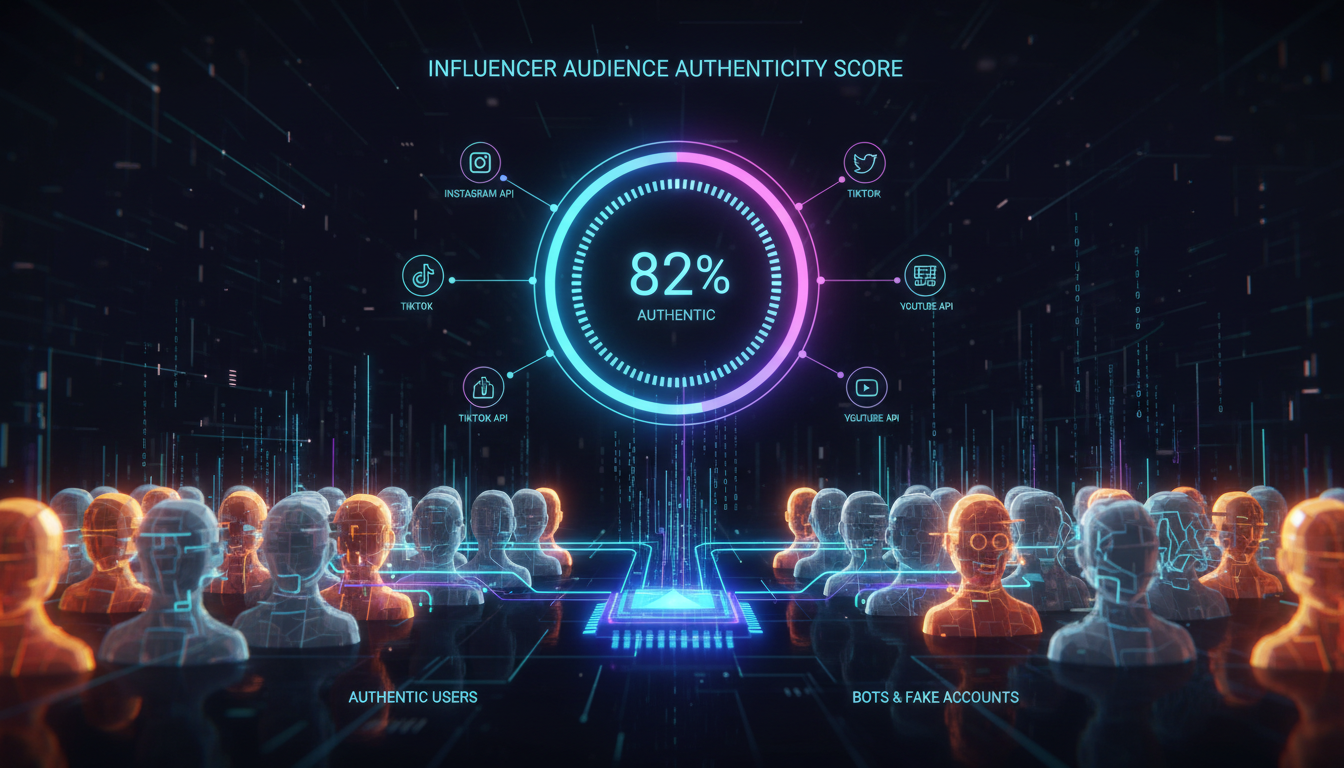
Our blog post will explore the steps to create an audience authenticity score with the help of social data APIs, the prime involved signals, scoring methods, API integrations, and the role of authenticity scores to correlate with any campaign ROI.
What makes an Audience Authentic vs Inflated
Before you should step ahead to create a scoring model via audience quality score API, dedicate some time to differentiate the authentic and inflated audiences. Here, the key is to analyze both characteristics as follows-
Characteristics of Authentic/Genuine Audience
A genuine/authentic audience group will highlight the following characteristics-
- Consistency in the user engagement
- Interaction of the content with real user profiles
- Organic follower growth with time instead of spontaneous growth
- Relevant comments and conversations
- Diversity in audience demographics
- Regular and repetition in engagement from the followers
Instagram, YouTube, Facebook, and other social media influencers create such audiences by producing quality content, developing trust, and strong engagement across the community.
Characteristics of Fake/Inflated Audience
Influencers with inflated audience often have the below characteristics-
- Bot accounts
- Purchased followers
- Fake likes and comments
- Engagement pods
- Sudden spike in followers without any content performance
- Low ratio of engagement to followers
For instance, influencers who have 500,000 followers but have only hundred interactions per social media post may have bot-created or inflated audiences.
Here comes the role of Influencer Audience Authenticity scores, which may estimate the genuineness of an audience and its value to organize various brand campaigns.
The 5 Influencer Signals that Matter the Most
Every brand, agency, or marketer should analyze the following 5 signals to check and make sure of the influencers’ audience authenticity based on the influencer vetting data-
- Engagement Rate
Engagement Rate refers to the reach or percentage of the audience interacting actively with your content. To calculate this, one should use the traditional formula that divides total number of engagements by total number of impressions followed by multiplying with 100. Here, the total engagement is the summation of the number of shares, likes, and comments.
Engagement Rate = Total Engagement (Likes + Comments + Shares) ÷ Total Impressions × 100
A few modern engagement metrics also include the “Save now” signal from the audience, as it indicates high content value based on the fact that users store the content to refer to later.
However, one should focus on the quality more instead of the quantity. For this, you should look for consistent engagement across different posts, relevant comments, and engagement patterns corresponding to the audience size.
- Audience Quality
Audience quality associated with the Influencer Audience Authenticity involves evaluating the authenticity, relevance, and engagement of the followers possessed by an influencer. Its main focus is to find out the exact number of real, and active followers instead of simply checking the follower counts at the surface-level. In this way, audience quality identifies the social media followers, which align with the target demographic of a brand. To check the audience quality, you must check the following-
- Profile completeness and age of the followers’ accounts
- Posting activities
- Ratio of followers-to-following
- Consistency in Follower Growth
Consistency in follower growth refers to the predictable and sustained accumulation of new subscribers instead of sporadic viral spikes. Here, the targeted average growth is from 2% to 8% per month. One can achieve this reliably by simply maintaining a value-driven and strict engagement and publishing schedule. In simple terms, followers of authentic creators grow steadily. Hence, brands and marketers should check and monitor the following-
- Daily or regular follower gains
- Weekly growth rates of followers
- Trends in monthly growth
- Comment Authenticity
Comment authenticity related to Influencer Audience Authenticity indicates the genuineness of reviews, feedback, and discussions on different platforms, like social media, blogs, and e-commerce websites. Authentic comments consist of discussions, personal experiences, opinions, and questions. In this way, comments may highlight many things about the influencers’ audience quality. Here, the key is to use Natural Language Processing to classify the quality of each comment.
- Consistency in the Audience Demographics
Consistency in the audience demographics refer to maintaining a predictable and a stable set of characteristics among the people buying or consuming your products/contents with time. These include the education, location, age, income, and gender. The demographic-related data makes sure that your messages resonate continuously with the appropriate target group. Accordingly, demographic consistency serves as a strong authenticity indicator for marketers and brands to verify influencers.
How to Weight and Combine Signals into a Score
One should follow the weighted score model to weigh and combine the collected influencers’ signals for the authenticity score-
Final Authenticity Score is the summation of each weighted score from the influencer signals. Accordingly, it is-
25.5+15+22.5+12+7=82 out of 100
Even though the score bands may vary depending on specific social platform, the score of 82 out of 100 is often considered as the excellent score band.
Which API Endpoints Supply Each Signal (with code snippets)
Now, we will explore a few of the popular social data APIs to collect raw data with code snippets required for authenticity score calculations.
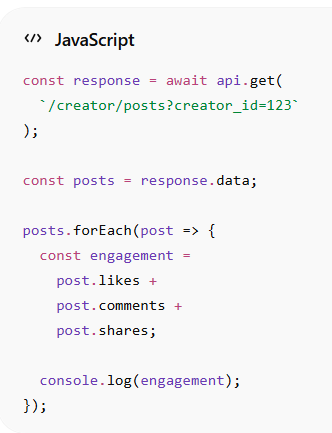
Engagement Metrics Endpoint
The engagement metrics endpoint is primarily used to measure the interaction consistency, engagement, and performance analysis of each post.
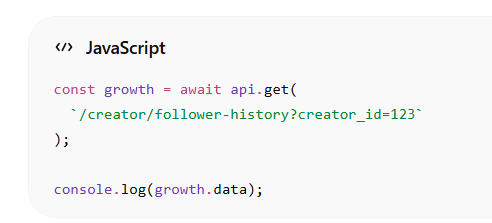
Follower Growth Endpoint
Follower growth API endpoint mainly identifies the spike in number of followers, tracks audience expansion, and analyzes the growth trends.
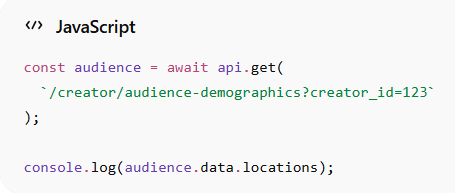
Audience Demographics Endpoint
Audience Demographics Endpoint is used for age and gender distributions, validating the audience targeting method, and detailed geographical analysis.
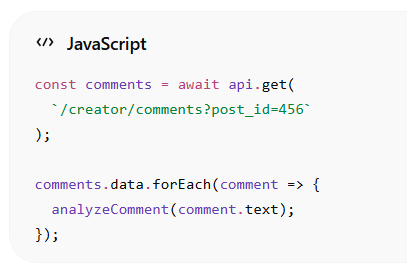
Comment Analysis Endpoint
Comment analysis endpoint detects spam, analyzes Natural Language Processing, scores sentiments, and evaluates the audience authenticity.
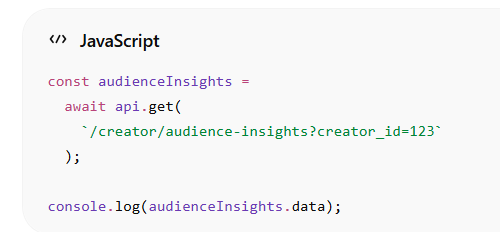
Audience Insights Endpoint
Audience insights endpoint is mainly used to evaluate the audience quality, analyze the activity patterns, and assess the followers’ behavior.
Where Phyllo's Social Screening API Fits In
Influencer marketing is consistently becoming data-driven, which forces social platforms to adopt automated methods to evaluate genuine and trustworthy creators/influencers. Luckily, Phyllo solutions use social media screening APIs to access available creator data and support various social screening workflows. In this way, every social platform may leverage its social data to validate audiences, analyze authenticity, and assess the available risks rather than reviewing creators manually.

Phyllo-powered social screening solution related to the Influencer Audience Authenticity follows the below workflow-
- Connect different social accounts of content creators
- Retrieve the engagement data and audience from each platform, say Instagram and YouTube.
- Run the necessary authenticity calculations
- Generate and assign the specific risk scores
- Prioritize creators/influencers for selecting an influencer campaign
Social Screening APIs reduce the manual review time by improving the quality of each campaign.
Does audience authenticity actually predict campaign performance?
Audience authenticity is of utmost importance and serves as a powerful predictor in campaign performance. It directly dictates the conversion success and financial efficiency of various influencer marketing and digital marketing initiatives. Modern predictive analytics highlight that the marketing campaigns designed by verifying genuine audiences will yield a relatively high return on investment as compared to those relying on merely follower counts. Modern predictive analytics highlight that campaigns built on verified audiences yield higher ROI — learn more about how APIs detect fraudulent influencers and what signals matter most.
How Scores Correlate to Campaign ROI
Influencer Audience Authenticity scores of influencer audience influence directly on the overall performance of a campaign. Brands regularly measure the engagement, reach, conversions, cost per acquisition, and returns on investment. In this situation, creators who have high authentic scores usually produce-
Improved Engagement
Real and genuine audiences interact meaningfully and frequently with every sponsored content leading to improved user engagement.
Higher Conversion Rates
Authentic Instagram, Twitter, and other social followers trust the creators’ recommendations, which led to a strong purchase intent.
Zero Expenses on Inactive Accounts
Authenticity scores prevent brands from paying even for impressions delivered to inactive accounts or bots.
Improved Brand Safety
Authenticity scores reduce the likelihood to partner with creators who often have artificially or bot-created metrics.
ROI may depend on many other factors as well. However, authenticity scores usually highlight strong and positive correlation with long-term campaign success.
Edge cases: Micro-influencers and New Accounts
Every influencer account does not fit the standard authentic weight-score model. Accordingly, new accounts and micro-influencers are the edge cases.
Micro-Influencers
Micro-influencers usually outperform large content creators even when they have a small audience group. They have the following characteristics-
- Expertise in their specific niches
- Strong trust in audience
- Highly engaged communities
Creators who have 10,000 followers and 9% engagement rate get more value as compared to those who have 500,000 followers and only 1% engagement rate. Scoring models must avoid penalizing content creators and influencers just because they have small audience size.
New Accounts
Besides micro influencers, new content creators deal with many challenges. A few common issues are insufficient data related to follower growth, limited engagement history, and small content libraries.
Here, the key is to increase weighting on the content quality, use confidence intervals, and reduce historical weights. Moreover, authenticity score models should classify their results as low, medium, and high confidence instead of assigning low authenticity scores to new influencers. By doing so, one can prevent unfair assessment to emerging creators.
Conclusion
A consistent growth in the influencer marketing budget has made audience authenticity an important metric for agencies, brands, and creator platforms. Vanity metrics are not enough to evaluate the creator quality. In this situation, organizations need to combine various critical signals to create a robust Influencer Audience Authenticity Score. These include demographic consistency, audience quality, follower growth consistency, engagement quality, and comment authenticity. Each signal will identify genuine influencers and reduce the campaign risk.
Social Data APIs powered by Phyllo automate the complete process at scale to transform millions of audience records, engagement events, and creator interactions into a single and actionable score. When APIs implement the data correctly, authenticity scoring will not only identify the inflated audiences but also boost the campaign ROI, creator selection, brand safety, and marketing effectiveness on a long-term.
Frequently Asked Questions
What is an Influencer Audience Authenticity Score?
An Influencer Audience Authenticity Score is a metric that estimates how genuine an influencer's audience is. It combines signals such as follower growth patterns, engagement quality, audience demographics, bot detection indicators, and follower-to-engagement ratios to determine whether an audience is organic or artificially inflated.
Which social data signals are most important for calculating authenticity?
The most valuable signals include engagement rate consistency, follower growth trends, audience demographics, suspicious account percentages, and comment quality. Together, these indicators help identify fake followers, engagement pods, bot activity, and purchased audiences.
Can social media APIs detect fake followers directly?
Most social media APIs do not explicitly label followers as fake. Instead, developers use available metrics such as follower counts, engagement data, account activity patterns, audience demographics, and profile characteristics to build machine-learning models or scoring systems that estimate authenticity.
How often should an authenticity score be updated?
For active influencer campaigns, authenticity scores should ideally be recalculated weekly or monthly. Regular updates help detect sudden follower spikes, engagement anomalies, or audience composition changes that may indicate fraudulent activity or emerging growth trends.
Why does audience authenticity matter for campaign ROI?
Authentic audiences are more likely to engage with content, trust recommendations, and convert into customers. Brands that evaluate audience authenticity before partnering with influencers typically achieve better campaign performance, lower fraud risk, and a higher return on marketing investment.
What is an influencer audience authenticity score?
An influencer audience authenticity score is a composite metric rating how genuine a creator's audience is, built from engagement quality, follower growth, comment quality, and demographics.
How do you weight each signal in an authenticity score?
One workable split gives engagement quality 30%, audience quality 25%, follower growth 20%, comment authenticity 15%, and demographic consistency 10%, then sums the weighted parts out of 100.
What counts as a good audience authenticity score?
Score bands shift by platform, but 82 out of 100 sits in the excellent range. Any weighted score beats judging a creator on raw follower count, which hides bots entirely.
Can social media APIs detect fake followers directly?
No. APIs rarely label a follower as fake, so you feed engagement data, account activity, demographics, and profile traits into a model that estimates authenticity instead.
How often should an authenticity score be recalculated?
Weekly or monthly while a campaign runs. Frequent recalculation catches sudden follower spikes, engagement anomalies, and shifts in audience makeup before more budget goes out.
How should scoring models treat micro-influencers and new accounts?
Small audiences should not be penalized, since 10,000 followers at 9% engagement beats 500,000 at 1%. For new creators, weight content quality higher and tag confidence as low or high.
How does Phyllo help with influencer audience authenticity scoring?
Phyllo is social data infrastructure for creator platforms. Its social screening API connects creator accounts, pulls engagement and audience data, then returns risk scores instead of manual review.